This week’s features start with an interesting flash back to a leading theme from almost ten years ago: 3D printers. While no longer as much in the spotlight, 3D printers have become a mainstay in makerspaces, engineering courses, and other design oriented spaces and programs in schools. It was clear when 3D printers arrived that they introduced a new mode of creation, and that we would need time to figure out just how to apply them. Now, over a decade later, 3D printers are creating extraordinary new possibilities in medicine (among other fields), including 3D printing bones and even organ structures. This appears to be just the beginning of what they can do. Find an excellent overview of pioneering uses of 3D printing in medicine in this week’s first feature.
In the second feature, explore a provocation in which a teacher identifies different pedagogical components of his teaching and creates random combinations of these components as a way of experimenting with varying his pedagogy. Is every combination practical? No. But does the experiment raise interesting ideas about varying our pedagogy to keep students engaged? Absolutely.
On this political moment
When selecting articles, I generally avoid topics like scandals, individual school crises, and, of course, politics. Instead, I’m interested each week in posts that provide utility to teachers, school leaders, and those adjacent to schools. Stories from local and national politics, while important for everyone, aren’t directly useful in schools, unless they are indicative of some greater trend that is useful to or informative for the work and planning of educators. Recently, however, politics have been having an immediate impact on schools and teaching. And, in the past few weeks, it has also become clear that education news outlets have had to divert their reporting resources away from topics like pedagogy and towards the implications of national politics. This week, these articles fall in the humanities section (re: government), and also find related pieces in admissions, athletics, history of education, pedagogy, general, and elsewhere.
In other news
Also this week, find pieces on music and learning, on leadership, on cognitive load, some of my favorite oldies but goodies (Atul Gawande on coaching, “the Art of Slow Reading,” and others) and even a ranked list of the commercials for today’s Super Bowl. And then in the AI Update, see a feature article on how AI is supporting medicine (another human centric activity like education). Is this a model of what the future of teaching and learning might look like? Connect
Last, I’ll be at NAIS (Nashville) and SXSWedu (Austin) at the end of February and early March. At NAIS, I’ll be sharing insights learned from ten years (10 years!) of the Educator’s Notebook. It’s been a joy to dig into what I’ve learned over the years — and also what I’ve heard from readers about how the newsletter has informed their practice and/or their school’s practice. I’m looking forward to sharing this, and would love to hear any stories from you that might help me understand how this newsletter has been useful for you. And if you’ll be at either conference, please let me know so we can connect!
These and more, enjoy!
Peter
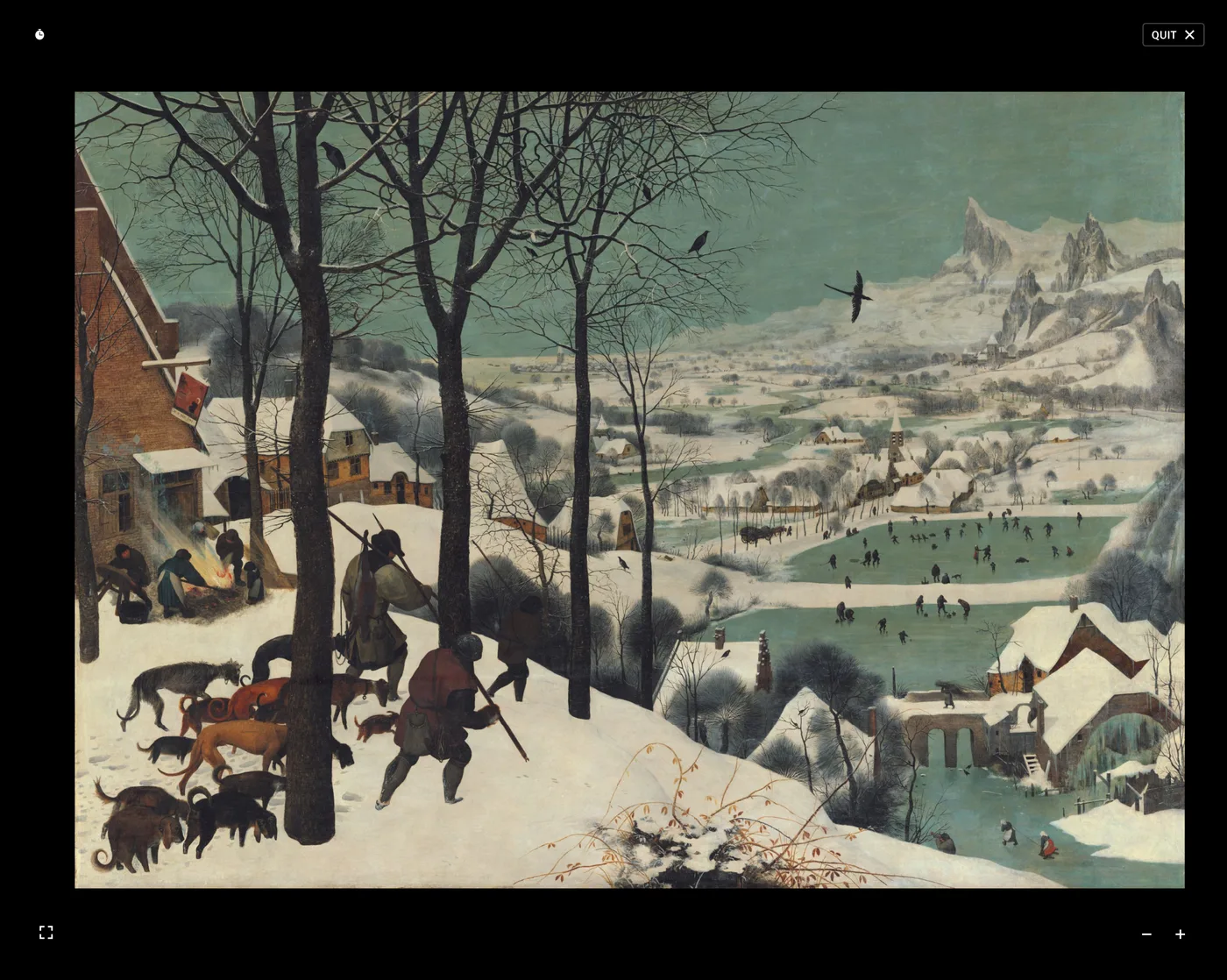
Can you spend ten minutes with this painting? Visit the New York Times (in the character section) to try this focus challenge.
“Just because you can 3D print something doesn’t mean you should, DeSimone says. You can print a house, but he’s not sure there’s a compelling reason to do so. Traditional methods work well enough. But 3D printing is finding a sweet spot in medicine, where its three-dimensional creative powers have the rare ability to match our three-dimensional bodies. “As we get closer and closer to how nature actually does it, it’ll become more and more successful and widely used,” says David Mohler, ’79, a clinical professor of orthopedic surgery who uses 3D-printed bone to replace pieces he must remove during cancer surgeries. What follows are four tales of how Stanford professors are changing human health, layer by layer.”
“Teaching, I realized, doesn’t happen within a vacuum like college lesson plans. Instead, it happens nested within courses, within schools, and within communities. As my thought experiment spiraled outwards, I thought about planning from an informational standpoint. I generalized and distilled my ideas to the following: 1. All subjects have fairly predictable, content-specific activities. 2. Lesson plans sequence activities for given content. As such, two things follow: 3a. The same steps often recycle for different content. (Same steps, different stuff.) 3b. Different sequences become different lesson plans. (Different steps, same stuff.)”
“Before introducing a category specific to the medium in 2023, the Grammy Awards rarely acknowledged video games. Christopher Tin’s “Baba Yetu” from Civilization 4 was the first piece of video game music to take home a Grammy in 2011, for Best Instrumental Arrangement Accompanying Vocalist(s), followed two years later by Austin Wintory’s brilliant work on Journey, which was nominated for Best Score Soundtrack for Visual Media.”
“When asked about the secret to his success, Jerry Seinfeld quoted what the swimmer Katie Ledecky said after winning 4 gold medals at the Rio Olympics: “The secret is there is no secret.” “There’s nothing you have to know,” Seinfeld elaborated. “You just have to work.” You just have to have staying power. You just have to find a way to stick it out, to prevail, to stay on the bus, to be able to do the mundane, boring, torturous work, day after day. You do that over a long period of time—three, four, five, six, seven, eight, nine, ten years—you’ll get to where you want to go.”
“Today, we bring you a new installment of our focus challenges, in which we ask you to spend uninterrupted time looking at one piece of art. We’ll now feature these on the first Monday of each month — starting today. Sign up here if you’d like to be notified. With that, let’s take a breath, bundle up and sink into a painting that’s almost 500 years old.”
“For the next few months I’ll be posting a series of posts on family, startup culture and careers. These vignettes are about how I’ve lived my life trying to make my dent in the universe and trying to teach others to do the same. I don’t expect you to agree with all the posts.”
“The long rise of the Nones, Americans with no religious affiliation, has seemingly reached its limit, and a fascination with the numinous shadows our culture once again. Within the intelligentsia there is a wave of notable conversions and a striking nostalgia for belief. But secularization has created a cohort with little acquaintance with organized religion, for whom the religious quest can feel a bit like entering a store where every faith has its wares on display.”
“A rough but useful rule of thumb would be that the president does command the executive branch but the executive branch does not command our government… The extent of both these sets of presidential powers — over the executive branch and within the constitutional system — is always contested and ambiguous. But the Constitution leans toward an expansive understanding of the first and a constrained understanding of the second.”
“We have a 2 million dollar grant to fix and update the emergency radio communication system for our county. We can't go out to bid until we know we will still get the money.”
“Halfway through the second school year that the new model has been in use, officials argue that it is paying off. The number of schools in Houston that were rated D or F by the state dropped to 41 from 121. Math and reading scores on state standardized tests have risen. The overall gains were “largest single-year growth in the district’s history,” district officials said… Onlookers and local residents say that for all his ambition, the superintendent has built up too much animosity to keep the momentum going — and that his model is doomed to flame out, as others have before."
“I’ve been a surgeon for eight years. For the past couple of them, my performance in the operating room has reached a plateau. I’d like to think it’s a good thing—I’ve arrived at my professional peak. But mainly it seems as if I’ve just stopped getting better... Professional athletes use coaches to make sure they are as good as they can be. But doctors don’t. I’d paid to have a kid just out of college look at my serve. So why did I find it inconceivable to pay someone to come into my operating room and coach me on my surgical technique?”
“For example, Uber has a mobile app (UI) that talks to their servers (API). You can imagine that their servers effectively take three parameters: credit card, drive from, and drive to… and they dispatch a human to do it.”
“To learn from an experience, we have to trust the evidence of our senses. To learn from a person, we have to trust them enough to believe that what they’re sharing is knowledge. We have to feel their values align with ours in that moment. Trust is a proxy for certainty in the absence of incontrovertible evidence. If someone makes a claim and I don’t (yet) know whether it’s true, I need to decide whether I trust the claimant enough to accept their claim. Education systems provide a shortcut to making these decisions. The institution and its agents have done the work of evaluating information sources for us and curating them to provide an approved learning menu.”
Possible futures for AI in education, AI for deeper learning, and more
In this week’s very short AI update, find two features on what AI might look like in schools in the time ahead. The first feature shows emerging uses of AI in medicine, which offers a new take on what the value add is of AI in a human-centered profession. Then in the second feature, explore a post from ASCD on how students might engage with AI for facilitating deeper learning, not short-cutting learning.
Beyond these, find a reflection on the possible place of robots in schools, and then, in the industry development section, an interesting trio of pieces suggesting that AI may not have the outsized impact that many current narratives today are suggesting. We’ll see. I’m a general believer in Amara’s Law: that we overestimate the impact of technologies in the short run, and underestimate their impact in the long run.
These and more, enjoy!
Peter
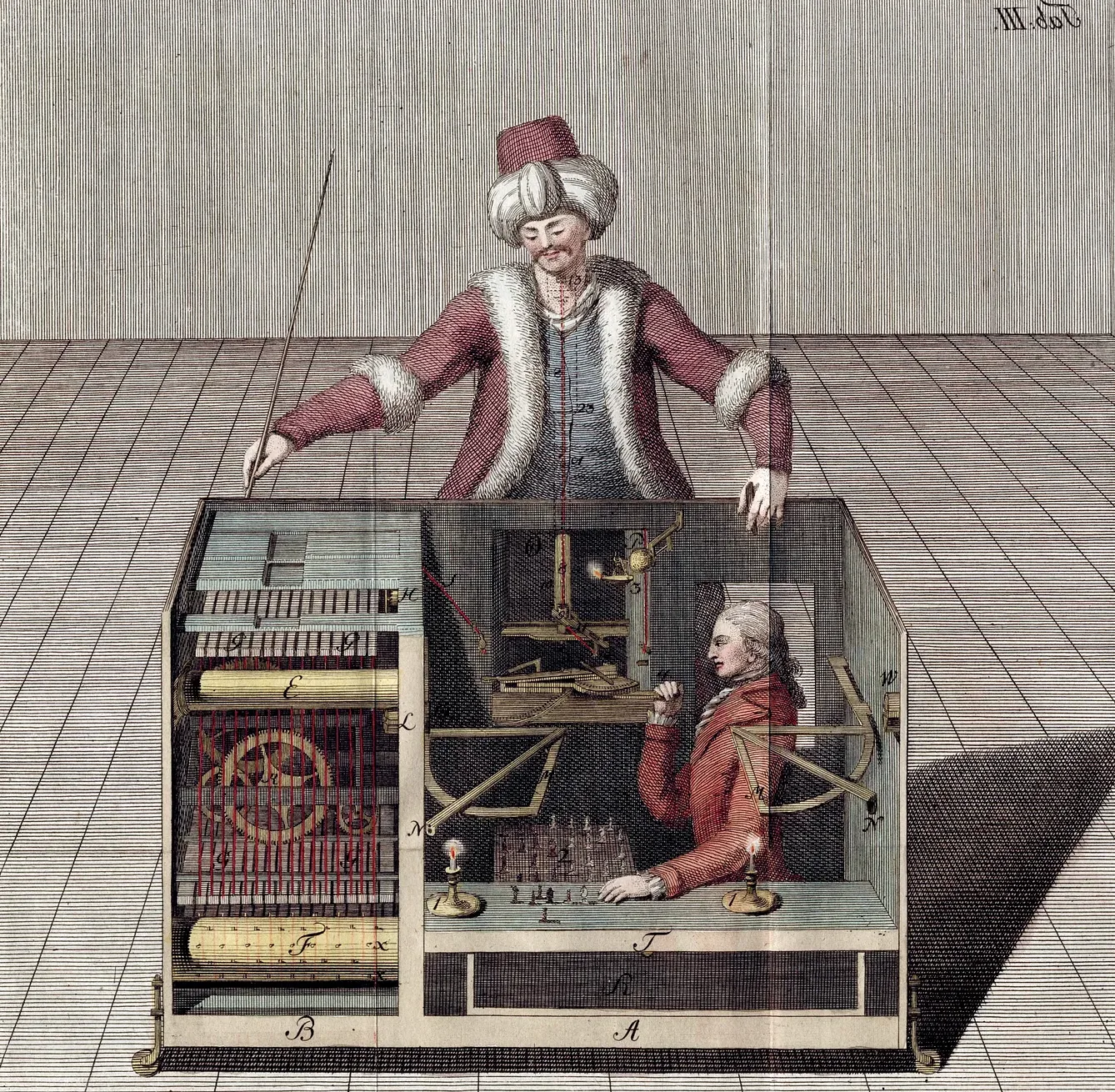
Marc Watkins references the Mechanical Turk in a piece that is skeptical of AI’s capabilities. See more in “Industry Development”.
“Here are just a few ways teachers can help students use AI tools that balance their need for autonomy and competence and allow them to actively engage in the learning process.”
“The best thing for medicine to do is to find a role for it that doctors can trust. The solution, we believe, is a deliberate division of labor. Instead of forcing both human doctors and A.I. to review every case side by side and trying to turn A.I. into a kind of shadow physician, a more effective approach is to let A.I. operate independently on suitable tasks so that physicians can focus their expertise where it matters most.”