Ezra Klein on rethinking education, media literacy, on studying history, and more...
Excellent writing this week —
In the features, check out Ezra Klein’s interview with Rebecca Winthrop from Brookings for an informed and thoughtful conversation about school in the age of AI. Also in the features, find an article from 1988 on why it’s important to teach history. (I love reading old articles on topics that are still relevant — sometimes it’s striking how much they are the same as present thinking, and other times it’s extraordinary just how different they are.)
Also this week, find an excellent post in the Curriculum section on media literacy, a similarly excellent post featured in the AI update on academic integrity in an age of AI, and much more.
Mostly, I’m reminded these recent weeks while compiling these newsletters how much volatile politics crowd out journalistic writing about the nuts and bolts of teaching & learning, which is where the greatest value for educators lies. High quality teaching and learning come from the small things we do in the classroom every day: building connections, asking good questions, paying attention to students, focusing on embodied learning experiences — and these aren’t as novel or exciting as “the news.” But they’re essential for us to keep at the fore. And perhaps as a reminder — in the midst of our political moment — of how important the nuts and bolts are: while the congressional majority in Washington has seemed fine with the Executive Branch taking authority over Legislative Branch functions, this week, when the Executive Branch sought to take control of the Library of Congress, all of Congress united against it. They’ll give up budget control, international relations, whole federal departments, and more — but not the library. To me, it’s a stark statement: that libraries — information, research, access — matter deeply. In other words: learning matters. Find more on recent events at the Library of Congress in the Government section below.
Last, the AI Update below is rich both with practical tools and with increasingly divergent future predictions for our AI-infused world.
These and more, enjoy!
Peter
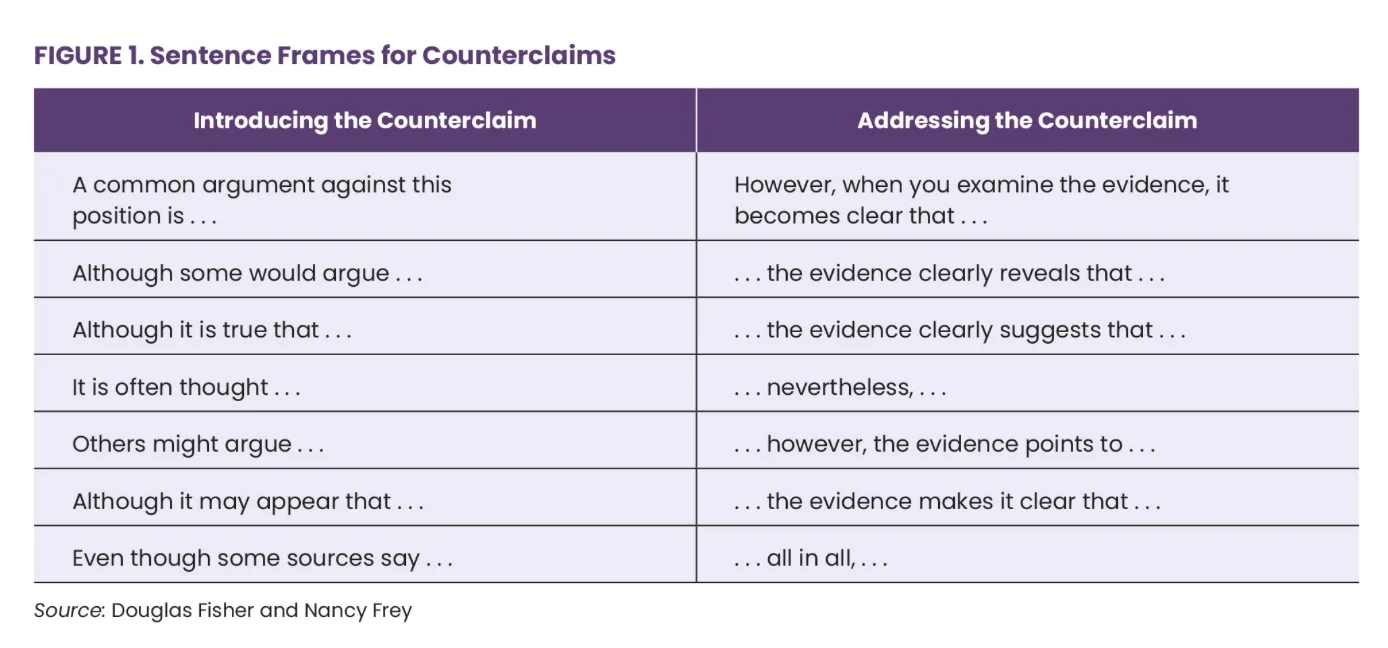
How to use counterclaims in writing, in the Reading/Writing section
“Textbooks would not need to be partisan in order to point out the danger of the partisan skewing of public issues. Left and right so often prefer to cry wolf, or conspiracy, when dull fact says otherwise. And it Is not only in children’s stories that when the facts justify alarm they are not heeded, because alarm has been so often abused.”
“In 1976, if you asked high school seniors whether they had read any books in the last year for fun, about 40 percent of them had read at least six books for fun in the last year, and only about 11 percent hadn’t read a single book for fun. Today, those numbers are basically reversed: About 40 percent haven’t read a single book for fun… And then — as if we summoned it or wrote it into the script — here comes a technology, generative A.I., that can do it all: that will read the book and summarize it for you; write the essay for you; do the math problem, even showing its work, for them… I don’t know what the economy or society is going to want from [my kids] in 16 or 20 years. And if I don’t know what it’s going to want from them, what it’s going to reward in them, how do I know how they should be educated? How do I know if the education I am creating for them is doing a good job? How do I know if I’m failing them? How do you prepare for the unpredictable?”
“It all adds up to the genre experiencing extraordinary reach: the variety of dance music people are producing and enjoying, the places they’re dancing to it, and the amount of media being generated about it. And depending on whom you ask, judging by the many interviews conducted for this article with D.J.s, label heads, bookers and venue owners across the dance music spectrum, that’s for better or worse — often both… The world, as it turned out, wanted to dance. A lot. After over a year of social isolation, people of all ages began making up for lost time.”
““Most DEI efforts are not unlawful under Title VI, and many are implemented to address discrimination,” said Kimberly Robinson, director of the Education Rights Institute at the University of Virginia School of Law. “However, race-exclusive efforts run a high risk of violating Title VI.””
“Boys and young men are struggling. Across their lives — in their educational achievement, mental health and transitions to adulthood — there are warning signs that they are falling behind, even as their female peers surge ahead.”
“The episode has given rise to a quiet battle over the separation of powers centered on a relatively obscure corner of the government. The outcome could determine not only the leadership of the library and its vast collection, but also whether members of Congress can continue to receive nonpartisan research materials on a confidential basis and who controls the immense repository of copyrightable material in the United States.”
“In the Opinion video above, Marci Shore, Timothy Snyder and Jason Stanley, all professors at Yale and experts in authoritarianism, explain why America is especially vulnerable to a democratic backsliding — and why they are leaving the United States to take up positions at the University of Toronto.”
“Generative artificial intelligence technologies have made written assessments of knowledge all but useless outside of supervised conditions. That doesn’t mean that writing isn’t important. It doesn’t mean that thinking through writing isn’t important, either. But it means that my experience of moving in and out of different platforms, drafting verbally, and even bringing in multimodal elements might become more and more common.”
“The work, they said, began decades ago with federal funding for basic research on bacterial immune systems. That led eventually, with more federal support, to the discovery of CRISPR. Federal investment in sequencing the human genome made it possible to identify KJ’s mutation. U.S. funding supported Dr. Liu’s lab and its editing discovery. A federal program to study gene editing supported Dr. Musunuru’s research. Going along in parallel was federally funded work that led to an understanding of KJ’s disease.”
“Studies have found that time-tested methods of learning — such as reading and writing on a page — are superior to screen-based approaches. One reason is simply a matter of time management. As a review of two decades of academic research concluded, children using laptops are easily distracted — and distracting to their peers. As kids might say: Well, duh.”
Divergent future visions, academic integrity, Claude vs ChatGPT, and more
What a week.
In the features, find two wildly divergent forecasts about how AI will affect our lives in the next 3-5 years. AI 2027 (in both the features and ethics and risk) paint a picture of AI spinning out of control within two years. And “AI as a Normal Technology” paints something much more mundane. So much depends on the decisions we make — and the decisions we make depend on the conversations we have and the learning they produce.
Also in the features, find an excellent examination of Academic Integrity in an age of AI. It’s not just about boundaries on assignments — it’s about transparency and explainability, and how those connect to the cultures of our classrooms.
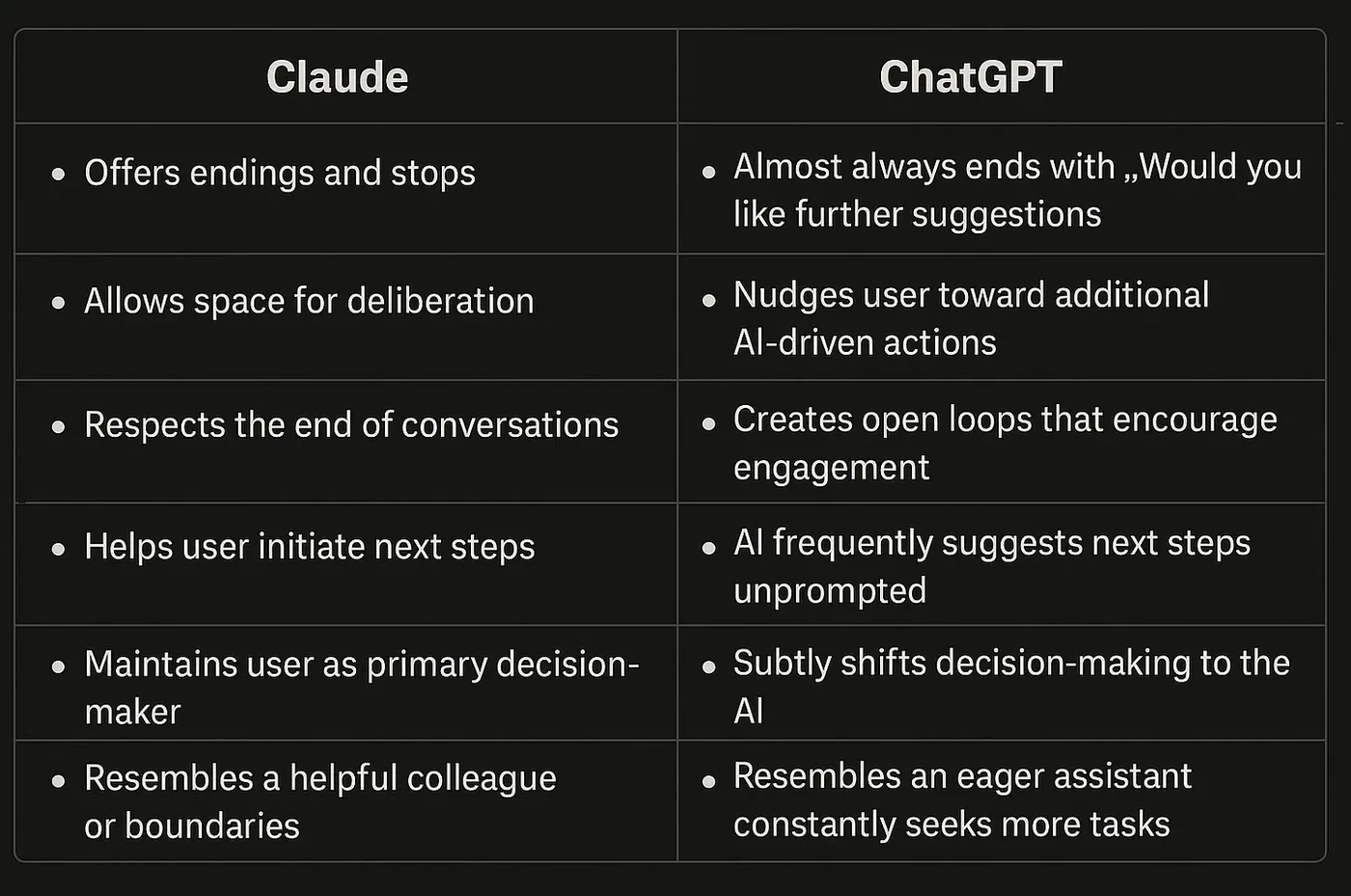
Also this week, see an excellent post comparing Claude and ChatGPT. I’ve recently switched to a paid subscription to Claude as my primary AI tool for many of the reasons now helpfully articulated in the post in the Education section.
Knight First Amendment Institute at Columbia University · 04/15/25
“To view AI as normal is not to understate its impact—even transformative, general-purpose technologies such as electricity and the internet are “normal” in our conception. But it is in contrast to both utopian and dystopian visions of the future of AI which have a common tendency to treat it akin to a separate species, a highly autonomous, potentially superintelligent entity… The statement “AI is normal technology” is three things: a description of current AI, a prediction about the foreseeable future of AI, and a prescription about how we should treat it.”
“Susan Morrow and Katherine Switzer revealed a different approach to accountability: the power of relationships, transparency, and explainability to ensure the integrity of results. The following steps can help you, and your students, take action to ensure academic integrity.”
“Kokotajlo: Yeah. And here might be a good point to mention that “AI 2027” is a forecast, but it’s not a recommendation. We are not saying this is what everyone should do. This is actually quite bad for humanity if things progress in the way that we’re talking about. But this is the logic behind why we think this might happen. Douthat: Yeah, but Dan, we haven’t even gotten to the part that’s really bad for humanity yet.”
“ChatGPT's persistent suggestions gradually condition us to follow AI-led thinking paths. Rather than genuine collaboration, we risk becoming passive participants, with the AI directing our creative and intellectual processes through a series of helpfully offered next steps… Claude's restraint in offering unsolicited next steps is a feature deliberately designed to preserve human agency and independent thinking.”
“Who are we? Daniel Kokotajlo (TIME100, NYT piece) is a former OpenAI researcher whose previous AI predictions have held up well. Eli Lifland co-founded AI Digest, did AI robustness research, and ranks #1 on the RAND Forecasting Initiative all-time leaderboard. Thomas Larsen founded the Center for AI Policy and did AI safety research at the Machine Intelligence Research Institute."
“AI excels at recognizing patterns and making predictions, but people provide the context, intuition and ethics. The most powerful results happen when each does what it does best.”
“In theory, there’s a third possibility. Observers of A.I. have long noted the existence of “centaurs”—human experts who push their efforts further with the help of computers. Maybe, for example, the first, well-trained cook could use an A.I. to come up with even more inventive recipes. But this optimistic scenario presupposes the continued existence of well-trained cooks.”