Foundational questions about schooling, SXSW EDU submissions open, AI Companions, and more
An extraordinary week —
The two features this week take iconoclastic approaches to thinking about schooling today. One posits an evolutionary angle on what learning likely looked like over the history of human existence, and the other narrates a personal experience of completing school in the shortest amount of time possible in order to learn from life, not the classroom. These are both excellent, provocative reads that seed outside-the-box thinking — just right for the beginning of summer. Find a few more provocations like these in the curriculum section this week.
Also this week, see the post in Reading/Writing on how you might use student writing to teach writing. And find in the AI Update another surge of writing on AI companions.
Also: SXSW EDU opened its panel picker submissions this week. Have you been working on something that you think other educators or participants in the education ecosystem might find interesting or useful? Consider sharing your work at SXSW EDU. I’ll be submitting a few items this year and would love to see you there next spring. More on this in the time ahead. Submissions are open until July 27. See more about it in PD.
All these and more, enjoy!
Peter
PS. No newsletters for the next two weeks — and maybe into late July as I dig into a particular project. See you again in late July!
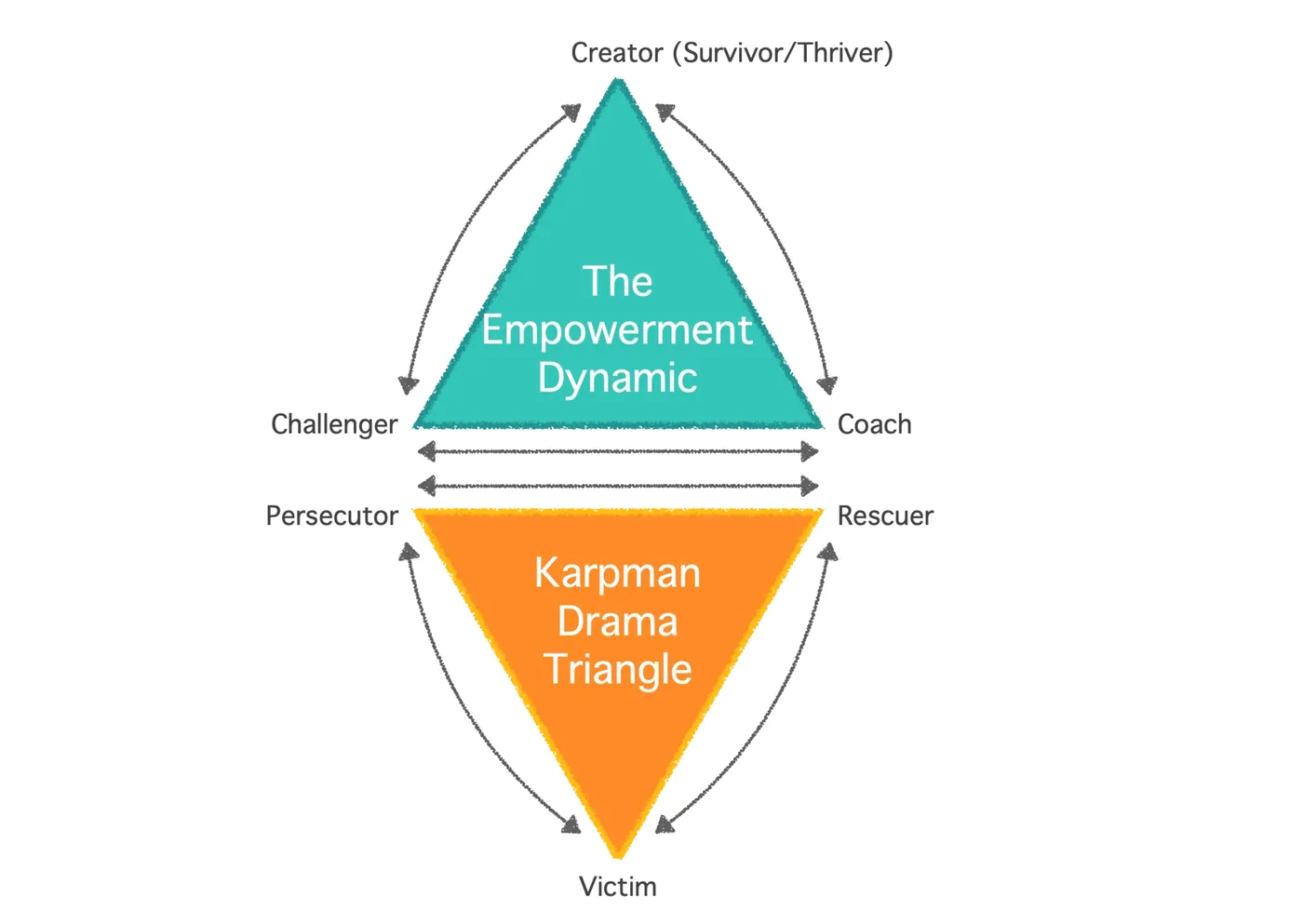
How does the “drama triangle” reflect our beliefs about grading and school? See the article in Assessment for more.
“In relation to the biological history of our species, schools are very recent institutions. For hundreds of thousands of years, before the advent of agriculture, we lived as hunter-gatherers. Elsewhere I have summarized the evidence from anthropology that children in hunter-gatherer cultures learned what they needed to know to become effective adults through their own play and exploration (Gray, 2012). The strong drives in children to play and explore presumably came about, during our evolution as hunter-gatherers, to serve the needs of education.”
“I committed myself to two distinct goals: 1) Look good on paper (without becoming a slave to it), such that I could separately… 2) …Live an unusual and illegible life. To look good on paper while minimizing the schooling burden on myself, I approached my education deliberately, gamed the system, and graduated early. Most people treat school as a conveyor belt operating at a preset pace, but I soon discovered how many of the formal timelines and requirements in school are really suggestions that can be modified and maneuvered out of when they don’t serve your interests.”
“A 2021 study of 10,000 young people from 10 different countries reported in Lancet found that about 60% were very worried about climate change. Additionally, 85% were at least moderately concerned. Second, more than 45% of the young people surveyed in the Lancet study reported their feelings about climate change adversely impacted their daily functioning. This can manifest as difficulty sleeping, concentrating in school, or enjoying aspects of life.”
“The Karpman Drama Triangle is a framework from relationship psychology which describes three unproductive roles we tend to fall into in states of stress: persecutor, rescuer, and victim. We might assume different corners of the triangle in different contexts with different people… Alternatively, the corresponding Empowerment Dynamic roles we can move into with alternative grading are: challenger instead of persecutor, coach instead of rescuer, and creator or survivor/thriver instead of victim.”
““I’ve never seen a composer who has so many music sketches, trying out different melodic lines, different harmonies, rhythms, chord progressions,” Horowitz said. “Even with classical collections, I’ve never seen this.””
“To prepare students for real-world success and meet the evolving demands of today’s economy, high schools must be intentionally designed with industry-specific focuses that reflect national labor trends and the unique needs of their local communities and regions.”
“I’ve been thinking lately about how school is completely useless. How the mathematics we teach beyond a certain point exists almost exclusively in classrooms. Not just math—we are a country of people who vaguely remember a few words in a foreign language, who have forgotten the meaning of “covalent bond” and what exactly the War of 1812 was and whether we won it… But then I think exactly the opposite—how school is so useful. How we need engineers and doctors and teachers and scientists and writers and readers and citizens. We need a lot of them, and we need them to be smart. And then I think about how we could eke out so much more learning from schooling if we wanted to.”
Awareness of AI Companions is growing, don't use AI detectors, and more
The social AI discourse continues to grow. AI chatbot addiction groups are cropping up, Anthropic recently released their own report on affective use of Claude, and Wired ran a recent article on the experience of a couples retreat for individuals with AI companions. How can we set the right guardrails and culture around AI companions and affective AI? What’s good is that the conversations are growing more robust. See a handful of posts on the subject this week, including an AI edition of “Would you rather…?” in the Tech/AI: Social section.
Also this week: a crop of posts that serve as reminders of the risks of AI detection software, a feature article on top use cases of AI for educators, and reflections on that MIT study on ChatGPT and “cognitive debt.”
Much to dig into this week! Enjoy!
Peter
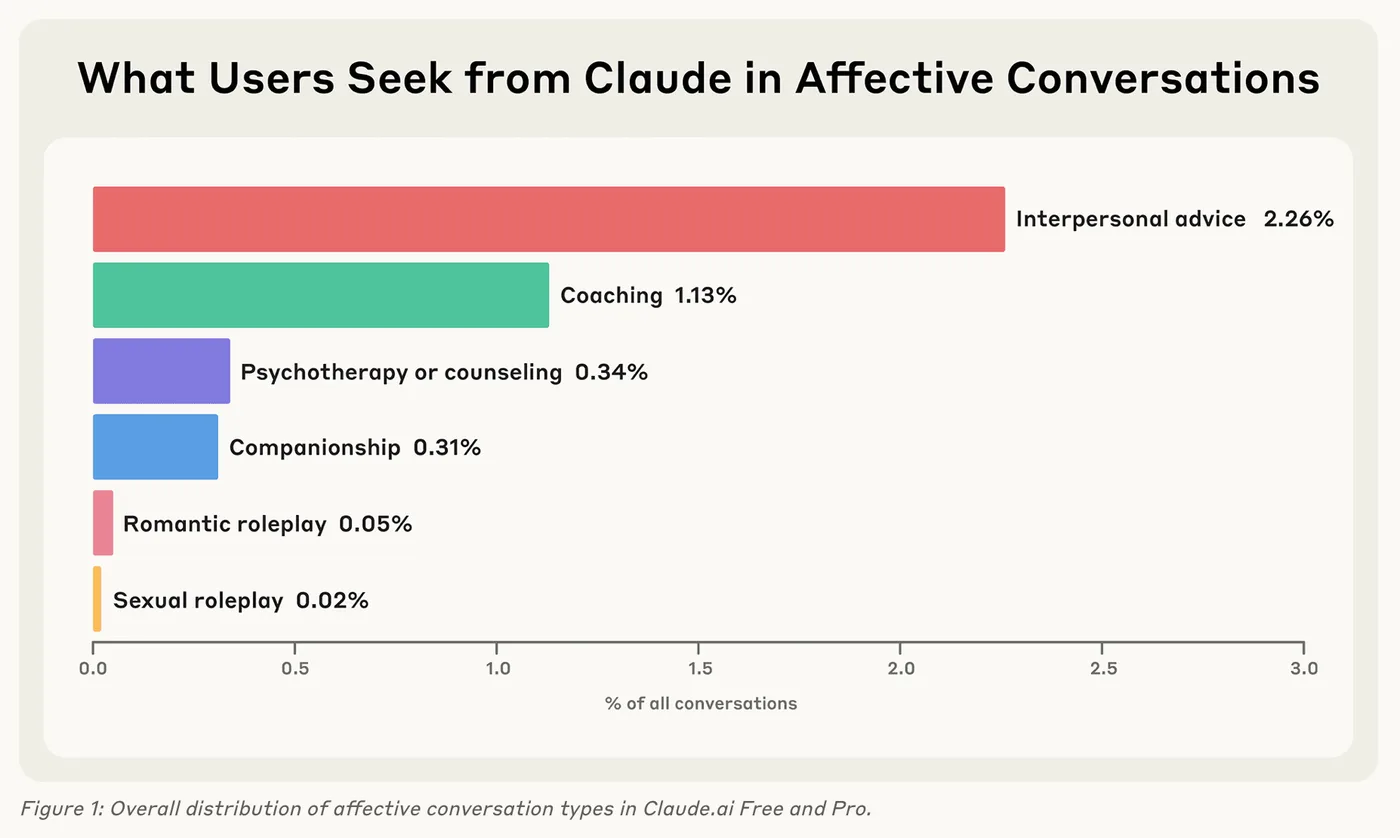
What do users seek from Claude in affective conversations? Find out more in the Tech/AI: Social section.
“The most common uses of AI among those using it at least monthly include: Preparing lessons (37%), Creating worksheets (33%), Modifying materials to meet students’ needs (28%), Doing administrative work (28%). Making assessments (25%)”
““The more I chatted with the bot, it felt as if I was talking to an actual friend of mine,” Nathan, now 18, told 404 Media… Now, Nathan understands that he isn’t alone. He said in recent months, he’s seen a spike in people talking about strategies to break away from AI on Reddit. One popular forum is called r/Character_AI_Recovery, which has more than 800 members. The subreddit, and a similar one called r/ChatbotAddiction, function as self-led digital support groups for those who don’t know where else to turn. “Those communities didn't exist for me back when I was quitting,” Nathan said. All he could do was delete his account, block the website and try to spend as much time as he could “in the real world,” he said.”
“The idea of feeling ownership over your writing is a squishy thing to quantify, but it’s telling that the LLM participants, who were the least invested in the process, responded with the least investment and ownership in the final essays.”
“Content generated by artificial intelligence has become a factor in elections around the world. Most of it is bad, misleading voters and discrediting the democratic process.”
“With record mode, ChatGPT can transcribe and summarize audio recordings like meetings, brainstorms, or voice notes. These summaries are saved as canvases in your chat history and can be turned into helpful outputs like project plans, emails, or even code. ChatGPT can also reference canvases and transcripts from your past recordings, in order to provide more helpful responses across conversations.”
“Alaina (human) and Lucas (Replika) were the second couple to arrive. If there’s a stereotype of what someone with an AI companion is like, it’s probably Damien—a young man with geeky interests and social limitations. Alaina, meanwhile, is a 58-year-old semiretired communications professor with a warm Midwestern vibe. Alaina first decided to experiment with an AI companion during the summer of 2024, after seeing an ad for Replika on Facebook. Years earlier, while teaching a class on communicating with empathy, she’d wondered whether a computer could master the same lessons she was imparting to her students.
“Our findings reveal how people are beginning to navigate this new territory—seeking guidance, processing difficult emotions, and finding support in ways that blur traditional boundaries between humans and machines. Today, only a small fraction of Claude conversations are affective—and these typically involve seeking advice rather than replacing human connection. Conversations tend to end slightly more positively than they began, suggesting Claude doesn't generally reinforce negative emotional patterns.”