In the features, find a practical (and well designed) post distilling research on the value of homework, especially at different grade levels. Also find a detailed look at one writer’s AI-assisted writing process. The latter post might be helpful for teachers trying to imagine what student writing with AI might look like in service of learning, not shortcuts.
Also this week, find tributes to Jane Goodall, classroom practices that nurture student voice, surveys about adolescence today, and more.
Interestingly, the article on reading levels in Mississippi also explores a historical tension between autonomy and consistency across classrooms and schools. In this particular case, consistency across the state came from robust professional development provided to help with a research-based curriculum. The author of the post (from Oakland, CA) notes that not only has Mississippi pulled reading levels up from below grade level, but it is now better than wealthier states like California. In other words, she writes, “If you live where I do, in Oakland, California, and you cannot afford private education, you should be seriously considering moving to Mississippi for the substantially better public schools.“
Big developments in AI, also. See the AI Update below.
These and more, enjoy!
Peter
PS. Here are some events on my calendar — with more to come in the time ahead. Drop me a line if you’ll be there, too. It would be great to say hello!
* October 15-16 – MASS CUE (Foxborough, MA)
* October 23 – NAMT (NYC)
* January 11-14 – FETC (Orlando, FL)
* February 25-27 – NAIS (Seattle, WA)
* March 9-12 – SXSW EDU (Austin, TX)
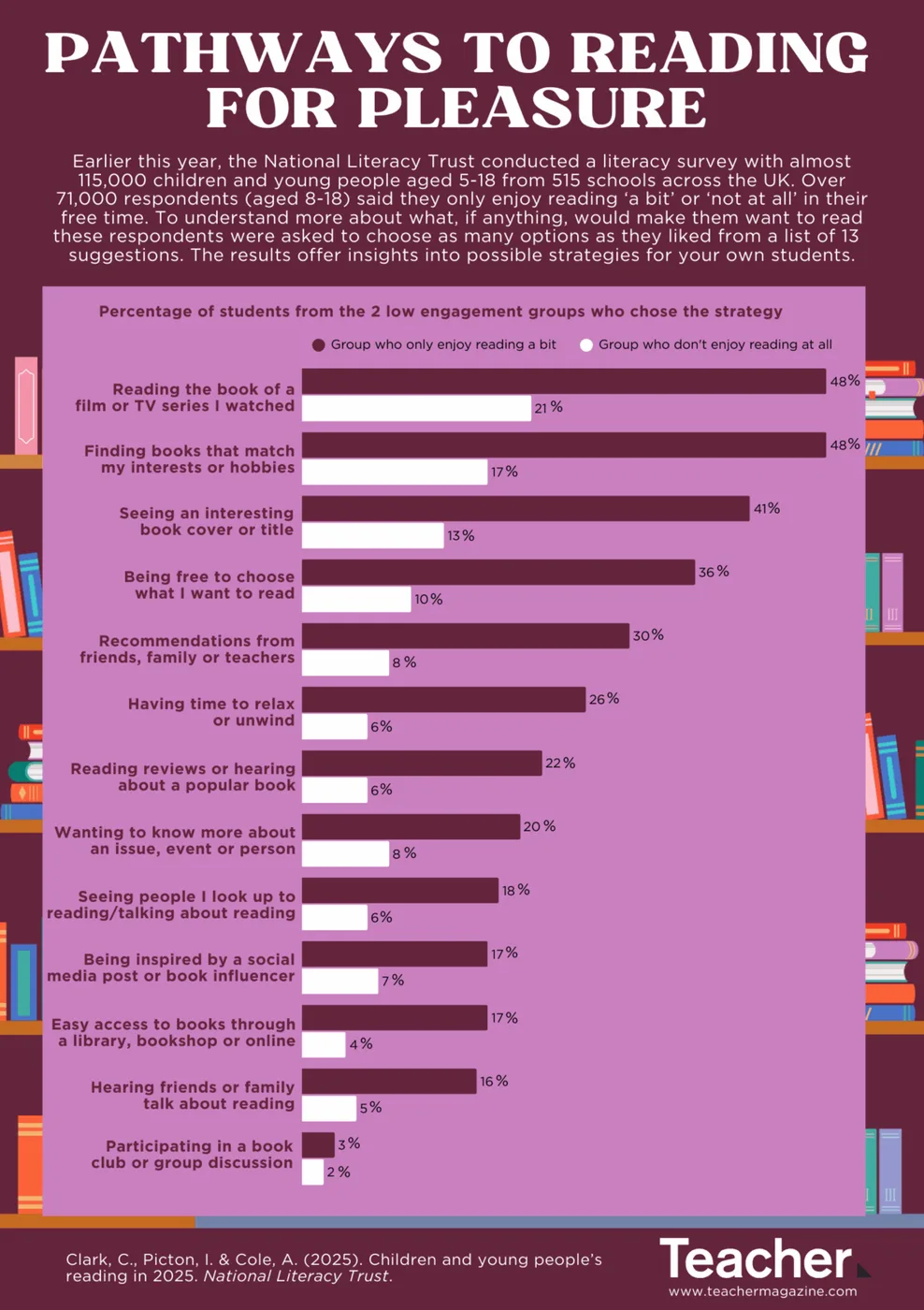
What do kids say will get them to read more? See the link in Reading/Writing for more.
“The value of homework is one of education’s most heated debates—and one of its most misunderstood. For some, homework reinforces learning while building study habits. For others, it’s unnecessary busywork that fuels stress and disengagement. Decades of research, however, suggest that the truth lies somewhere beyond these binary distinctions: Homework has increasing value as students climb through the grade levels, and that’s especially true in high school, once time-management skills are in place. For younger students, the gains, when they can be spotted at all, are more nuanced—but at any grade level, from elementary to high school, poorly designed tasks or rigid homework policies can create more problems than they solve.”
“Many people assume AI writing means typing a prompt and getting back polished prose that you publish with minimal input. The human becomes a passive consumer of AI-generated content, while the AI does the creative and intellectual work. Sure, you can do that, but expect crap. I use AI differently, at several stages of the process, so I decided to shed some transparency to that. I even traced the origin of the words that made it to the final version.”
“The compact would require colleges to freeze tuition for five years, cap the enrollment of international students and commit to strict definitions of gender. Among other steps, universities would also be required to change their governance structures to prohibit anything that would “punish, belittle and even spark violence against conservative ideas.””
“If you live where I do, in Oakland, California, and you cannot afford private education, you should be seriously considering moving to Mississippi for the substantially better public schools.”
“I am not alone in feeling that students who came of age at this time have been harmed, cognitively, by that combination of brainrot outside of school and the loss of a physical connection to classic works of literature in the classroom. Ironically, however, that very literature was once profoundly controversial. What we now call classic literature was the brainrot of its day — or at least many thought so… In the 18th century, novels were condemned for harming public morals and intellectual life.”
“It is lovely to be in an artistic atmosphere again. I realize now, more than ever before, that I can never live wholly without it. It feels so heavenly to be able to just sit in front of the fire & talk for hours — of cabbages & kings — poetry, literature, art, music, philosophy, religion. It’s wonderful, marvelous, terrific… I will stop now, because I have to wash my hair.”
“Dr. Goodall, who earned her Ph.D. from the University of Cambridge, shared her observations both in scientific papers and in hugely popular books. Some experts criticized her for giving the Gombe chimpanzees names instead of numbers, and for suggesting that they had individual personalities. But her writing drew in generations of new scientists who did more research on chimpanzees and other apes. “It was after reading her books that I put on my boots and binoculars and went out in the jungle,” said Catherine Crockford, an expert on chimpanzees at the Max Planck Institute for Evolutionary Anthropology.”
AI generated video, perceptions of people using AI, and social AI risks
Almost three years in, the field of generative AI continues to leap forward — now in more specialized directions.
In the features, find out about the next iteration of OpenAI’s Sora. Also, see how researchers are actually leaving the major AI companies to start companies specifically focusing on advancing scientific research through AI robotics. We will soon be seeing a jump in basic research leading to new fields of innovation.
Last in the features, see the recent post from the Rithm Project. I have frequently highlighted the emergence and risks of AI companions. The Rithm Project continues to be, in my mind, one of the leading organizations examining the risks related to AI companions and youth. In their post this week, the Rithm Project examines three widely publicized cases of tragedies that emerged from AI companions, exploring what specifically led to the downward spirals in each case. They then offer guidelines for various stakeholders to help prevent these kinds of cases in the future. This is important guidance for educators (and parents).
Also this week: Google takes its first step towards creating AI generated customized textbooks. This is the beginning of an enormous opportunity for educators. The prototypes are still rough, but they will improve.
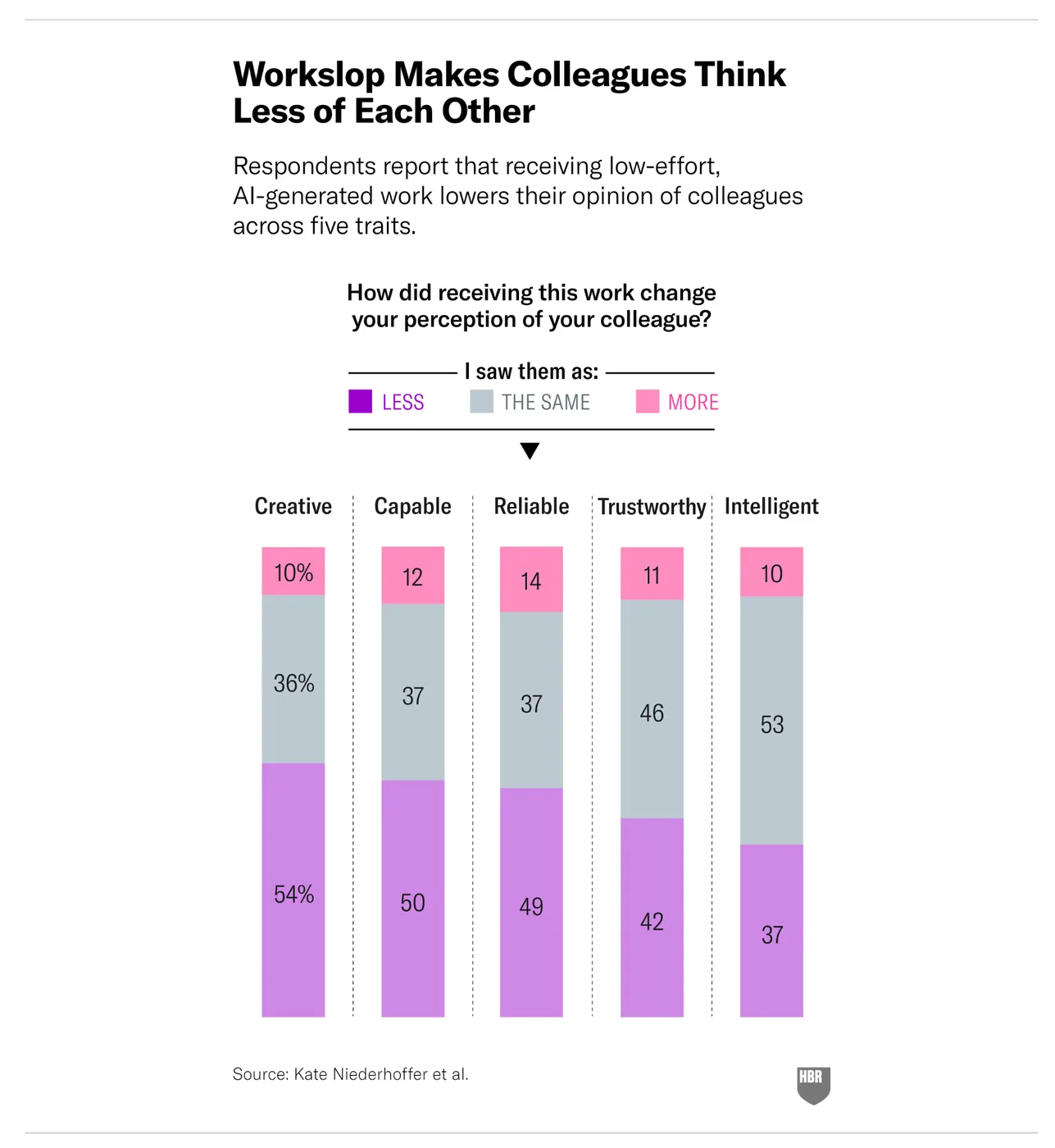
See also the HBR article on how employees perceive other employees who use AI in their work, especially when the product is not good. What’s the lesson? It’s not bad to use AI at work, but it is bad to use AI poorly at work.
These and more, enjoy!
Peter
Perceptions of peers who use AI in the workplace. See the Ethics and Risk article for more.
“Dr. Agarwal is among more than 20 researchers who have left their work at Meta, OpenAI, Google DeepMind and other big A.I. projects in recent weeks to join a new Silicon Valley start-up, Periodic Labs. Many of them have given up tens of millions of dollars — if not hundreds of millions — to make the move. As the A.I. labs chase amorphous goals like superintelligence and a similar concept called artificial general intelligence, Periodic is focused on building A.I technology that can accelerate new scientific discoveries in areas like physics and chemistry. “The main objective of A.I. is not to automate white-collar work,” said Liam Fedus, one of the start-up’s founders. “The main objective is to accelerate science.””
“After we spent less than a day with the app, what became clear to us was that Sora had gone beyond being an A.I.-video generation app. Instead, it is, in effect, a social network in disguise; a clone of TikTok down to its user interface, algorithmic video suggestions and ability to follow and interact with friends. The powerful A.I. model that Sora is built on makes it simpler to produce clips, giving people an almost unlimited ability to generate as many A.I. videos as they want. It was also disconcerting.”
“As a researcher at Meta, I spent years studying how algorithms either perpetuate or interrupt harmful content spirals. That experience makes the recent, widely reported stories of young people being nudged toward suicidal ideation while interacting with chatbots deeply sobering and unfortunately familiar. With the rise of these cases, I wanted to know: what can we learn from the online rabbit holes people have found themselves in over the last two decades, and how can we build and interact with AI in ways that protect those most vulnerable?”
“The most alarming cost may be interpersonal. Low effort, unhelpful AI generated work is having a significant impact on collaboration at work. Approximately half of the people we surveyed viewed colleagues who sent workslop as less creative, capable, and reliable than they did before receiving the output. Forty-two percent saw them as less trustworthy, and 37% saw that colleague as less intelligent.”