How much kids are reading, connecting math and culture, on giving and receiving feedback, Brown v Board 70 years later, and more
An extraordinary week:
The second feature article this week tackles a growing concern about the state of reading today: how much are kids reading in an age of social media, how much AI might change our reading patterns, what role reading should have in the curriculum, and more. Check out Doug Lemov’s essay on the importance of providing shared experiences with books in today’s world.
And the first article lives right at today’s emerging AI moment. In a week in which OpenAI and Google both released astonishingly human-like AI tools, find this excellent reflection on how human curiosity is distinct from what one might call digital curiosity. This week’s AI section also explores current developments in depth and how we might best approach them.
Additionally, find excellent posts this week on “ethno-mathematics”, Brown v Board 70 years later, feedback, and more.
These and more, enjoy!
Peter
From this week’s feature article on curiosity and AI
“Stories gain even more power when they are brought to life by reading aloud. In fact, this may be the book’s primary chance of salvation. If the book is going to survive its death struggle with the isolating and disconnecting technology of the smartphone, its best bet, I argue, will be if we can encourage students to read books with each other, laughing and gasping together, and in so doing create meaningful and connected experiences that they hope to re-create by reading more and further. Books are the ideal vehicle to both inform us and link us together. It’s time we brought them back into the classroom and made the shared experience of them the centerpiece of literacy instruction.”
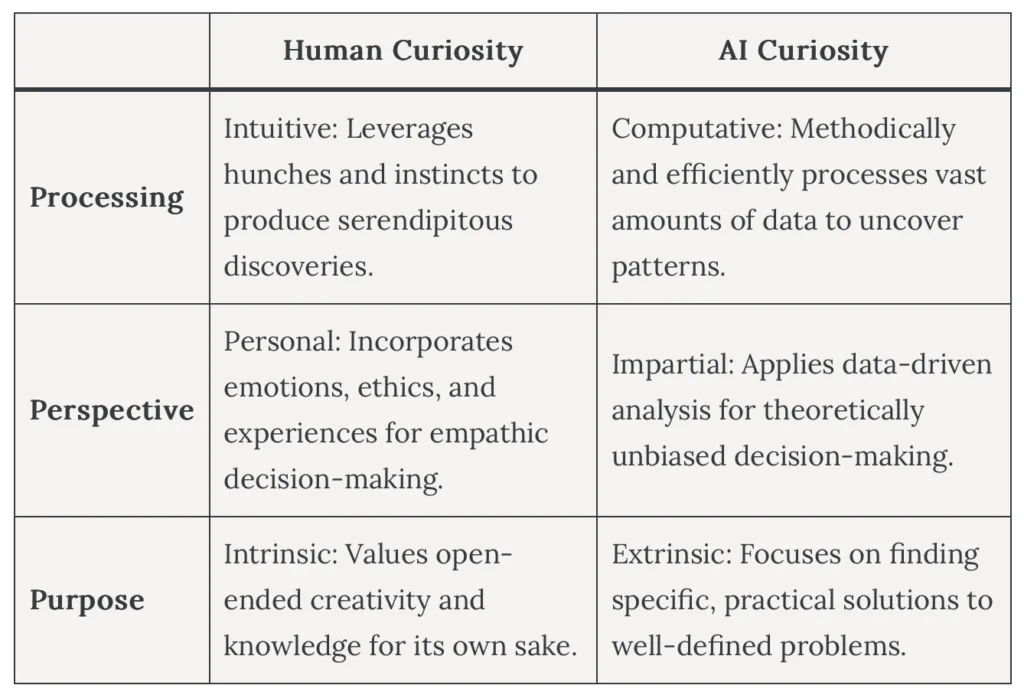
“To understand the distinct roles of human and AI curiosity, I found it helpful to examine their unique characteristics through a comparative framework. This framework looks at three key aspects of curiosity—processing, perspective, purpose—and examines how humans and AI differ across these dimensions.”
“Music baffled Charles Darwin. Mankind’s ability to produce and enjoy melodies, he wrote in 1874, “must be ranked amongst the most mysterious with which he is endowed.””
“We finally have a chance to move courses and grades into the background and foreground powerful personalized learning experiences and capture and communicate the resulting capabilities in much more descriptive ways—and do it at scale.”
“A recent study compared the learning of students when provided with extended time in direct instruction or active learning: a block of both in which students engaged in each methodology for about nine minutes and in intervals of three-minute changes between both approaches. The three-minute intervals turned out to be the most beneficial for students in learning and applying core content. The intervals allow students to stay focused on explicit modeling while also having time to process the information with others. These two approaches appear to complement each other when placed in a brief window of time.”
“But, first and foremost, she wants books by women, with women at the center of the action who save themselves. “Because that’s what women do,” she said. “No one’s coming to save us.””
“Ethnomathematics falls under the same umbrella as culturally responsive math instruction. Experts say that teaching math this way requires teachers to get to know their students and create a learning environment where students can connect to math concepts. It involves developing lessons that reveal the math in everyday activities, like skateboarding, braiding and weaving. It can also include exploring the math involved in cultural practices, like beading.”
Astonishing new models from OpenAI and Google, how to engage faculty, and more
This week’s first feature dives right into the implications of OpenAI’s new release — GPT-4o. Ethan Mollick’s reflections highlight what it means to have an extraordinarily high-powered, omni-modal tool available to millions of people for free. See his post for an overview, and then explore the actual demonstrations from OpenAI further down. And also see the updates from Google in Industry Development — their new model was released the very next day and shares many of the same features.
Also in the feature, explore Leon Furze’s excellent post on engaging your colleagues and faculty with GenAI. Furze walks through a faculty meeting or department meeting exercise to show the new capabilities of emerging models, including opportunities for making meaning.
These and much more, enjoy!
Peter
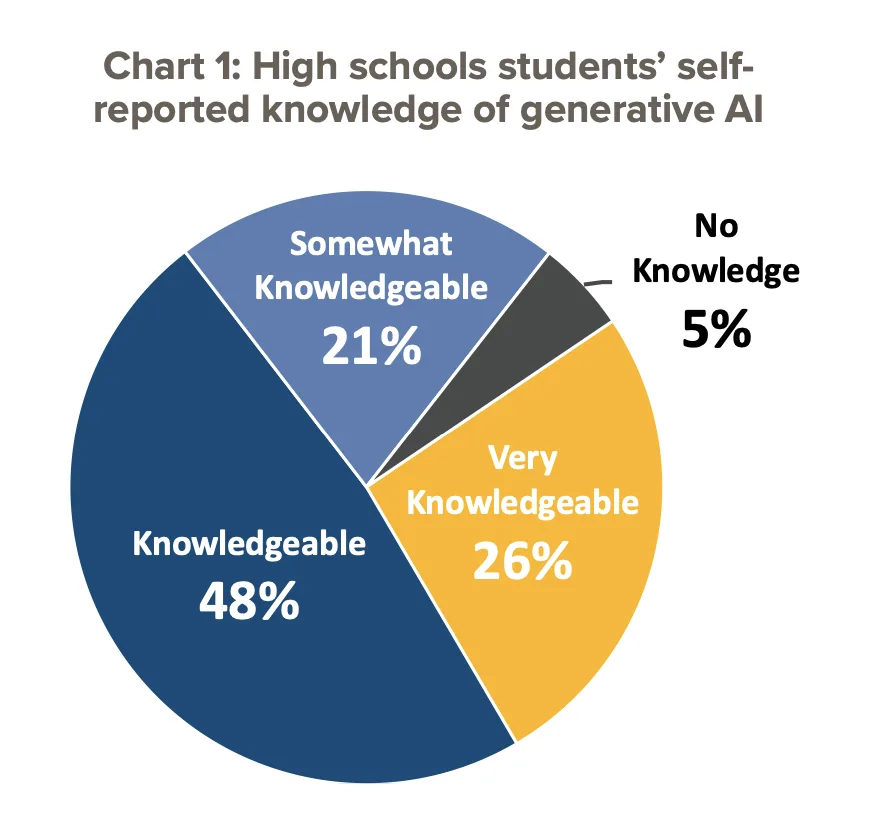
From the student poll referenced in the Education section below.
“I have two things I need to do right now: Decide which skills are fundamental to my discipline, and which absolutely need to be learned slowly, methodically, and without offloading onto technology. Decide which skills and content I can (or must) offload, knowing that GenAI is now competent across a broad range of multimodal skillsets. This is where it becomes necessary to attack your assessments. Whatever you are teaching, and whether you’re in K-12 or Higher Education, your assessment tasks are more vulnerable than you think to Generative AI… Here are the step-by-step instructions for the faculty meeting activity:”
“Likely the biggest impact of GPT-4o is not technical, but a business decision: soon everyone, whether they are paying or not, will get access to GPT-4o… GPT-4 is a powerful tutor and teaching tool. Many educational uses were held back because of equity of access issues - students often had trouble paying for GPT-4. With universal free access, the educational value of AI skyrockets (and that doesn’t count voice and vision, which I will discuss shortly). On the other hand, the Homework Apocalypse will reach its final stages. GPT-4 can do almost all the homework on Earth. And it writes much better than GPT-3.5, with a lot more style and a lot less noticeably “AI” tone. Cheating will become ubiquitous, as will universal high-end tutoring, creating an interesting time for education.”
“69% of college-bound students have used generative AI tools. 35% are using these tools for schoolwork. 8% are using them in the college admissions process. ~54% expect that colleges are engaging in AI usage and education in some way.”
“I wish it went without saying that the learners in these videos are not typical of US K-12 students. They do not represent the median student in age, education, socioeconomic status, or the desire to perform, especially here for cameras broadcasting to a worldwide audience. What is typical? In a large 2018 study of thousands of students, Khan Academy reported that only 11% of participating students used its software for the recommended dosage of 30 minutes per week. This was in a study population of teachers who committed to helping their students meet that usage threshold.”
“Imagine an interstellar voyage. You can build spaceships with the technologies that we have now that might take, say, 500 years to reach the destination. Or you could wait for 50 years and, with technology advancements, build a ship that will get you there in 100, overtaking the original 2024 spaceship while it’s still chugging through the first part of its journey. Sometimes it is genuinely better to wait and see.”
“Still, she has found several uses for A.I. “I find that A.I. is really helpful for speeding up the annoying prep tasks that take me the longest, like generating a list of new stoichiometry practice problems for students to drill at home to be ready for an assessment,” she wrote. She also finds it useful “to reword scientific articles to help students with disabilities” and to help Advanced Placement students “brainstorm topics and research questions.””
“If you debate with an AI, they are 87% more likely to persuade you to their assigned viewpoint than if you debate with an average human. GPT-4 helps people reappraise a difficult emotional situation better than 85% of humans, beating human advice-givers on the effectiveness, novelty, and empathy of their reappraisal. GPT-4 generates startup ideas that outside judges find to be better than those of trained business school students. 149 actors playing patients texted live with one of 20 primary care doctors or else Google's new medical LLM. The AI beat the primary care doctors on 28 out of 32 characteristics, and tied on the other four, as rated by human doctors. From the perspective of the "patients," the AI won on 24 of 26 scales of empathy and judgement.”
“The internet revolution showed that, despite potential pitfalls, early adoption has its advantages. With GenAI, the landscape is even more complex and rapidly evolving. It’s natural (and perfectly okay) to have your apprehensions and doubts about its adoption in professional and personal settings… If you can cut through the noise and develop a nuanced understanding and appreciation for this new breed of technology, you’ll have a powerful tool at your disposal.”