Notetaking methods, generational change, ACT updates, college admissions and more
A crisp week this week.
In the features, find a meta-analysis comparing note taking by hand versus note taking by typing. The consensus appears to be that note taking by hand leads to better test taking outcomes, except in cases where typing can help overcome a disability. Previous studies have shown that note taking by typing can be helpful for future reference, though this finding does not appear to show up in this study.
Also in the features, find one college professor’s reflection on the changing expectations and perceptions of his students. Is it a cheap generational critique, or does it reflect a shared reality? I’ll be interested to see if this essay echoes elsewhere.
Also this week: changes in the ACT, college admissions posts, a rich humanities section, and a number of compelling developments in the AI section at the end, including guidance on teaching computer science in a GenAI world.
These and more, enjoy!
Peter
PS. I continue to seek out conversation with teachers, school leaders, and others who are open to sharing your class planning experience or the way you support teachers in designing and delivering excellent learning experiences for students. Thank you to those who have already responded! If you haven’t yet, please consider joining for a 20 minute conversation by scheduling a time here.
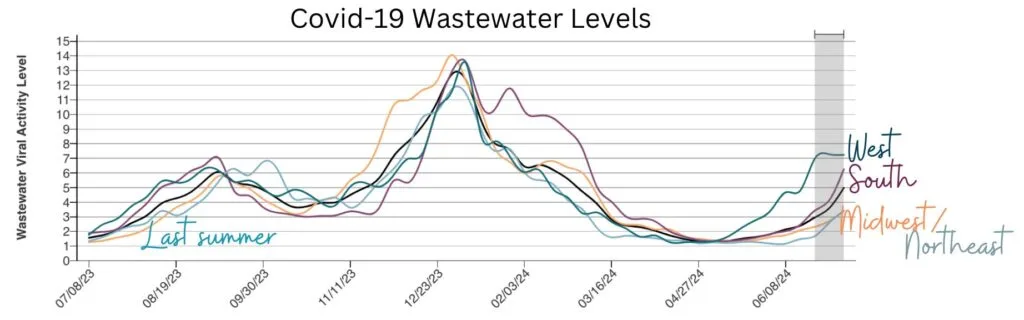
We are in a COVID wave. See the Health section for more.
““Who’s the target audience?” I’d ask in class, followed with an ominous, “And why does that matter?” Contemplating everything from a Harper’s essay to an early Lana Del Rey video, my Gen Z students propose: “It targets Gen Z,” even when that seems all but impossible… Forty years after Postman decried the nation’s passivity in front of the tube, many of us would be thrilled to see undergraduates actively seeking out media that isn’t algorithmically channeled to them.”
“There was a clear benefit on performance for handwritten notes compared to typed notes. The researchers calculated how the strength of the benefit would translate to grades in a hypothetical scenario and suggested that 9.5% of the students who take their notes by hand would achieve an A whereas only 6% of the students who type their notes would achieve an A (and the pattern would reverse for the lower D and F grades).”
“Oklahoma Superintendent Ryan Walters, who has called the separation of church and state a myth, issued a June 26 memo to school districts, directing them to incorporate the Bible into classes for 5th through 12th grades… Debates over teaching the Bible are woven throughout the nation’s history, said Benjamin Justice, a professor of educational theory, policy, and administration at the Rutgers University Graduate School of Education who has written several books on religion and public schools… The challenges of presenting the text without favoring or excluding any particular religious group have only grown more complex as the nation has grown more religiously diverse, Justice said.”
“Covid-19 levels in wastewater—one of the best (only?) metrics of community spread these days—have reached the “high” category. This means that if you’re sick today, it’s likely Covid-19. This also means it’s time to get that indoor air moving and to wear a mask if you don’t want to get sick.”
“I analyzed the top 200 sci-fi films and tv shows every decade from the 1950s to present day. What I found was that sci-fi narratives from yesteryear were quite different from today’s stories.”
“The women’s suffrage movement. Corporate capitalism in the West and South. African American rights after the Civil War. The memory of the Civil War in the South. War between Native peoples and the U.S. government. “All of those things show up in the game,” Olsson said.”
Understanding whale song, CS guidance on GenAI, and more
Compelling developments this week.
In one feature, explore how researchers leverage AI to understand whale song. In the other, see guidance from TeachAI and the Computer Science Teachers Association on the future of teaching CS in a GenAI world.
Also this week: AI leader Andrej Karpathy leaves OpenAI to found an education AI company. Is this a brave new future, or an echo of the MOOC boom (and bust?) from the early 2010s. We’ll see.
Last, find two articles about how the tech sector is grappling with the legal gray area of data for AI model training. As we move on from the Great Devouring of all human knowledge on the internet to a method of training AI that honors intellectual property and better ensures alignment, data sets will become more important — and also more difficult to come by.
These and more, enjoy!
Peter
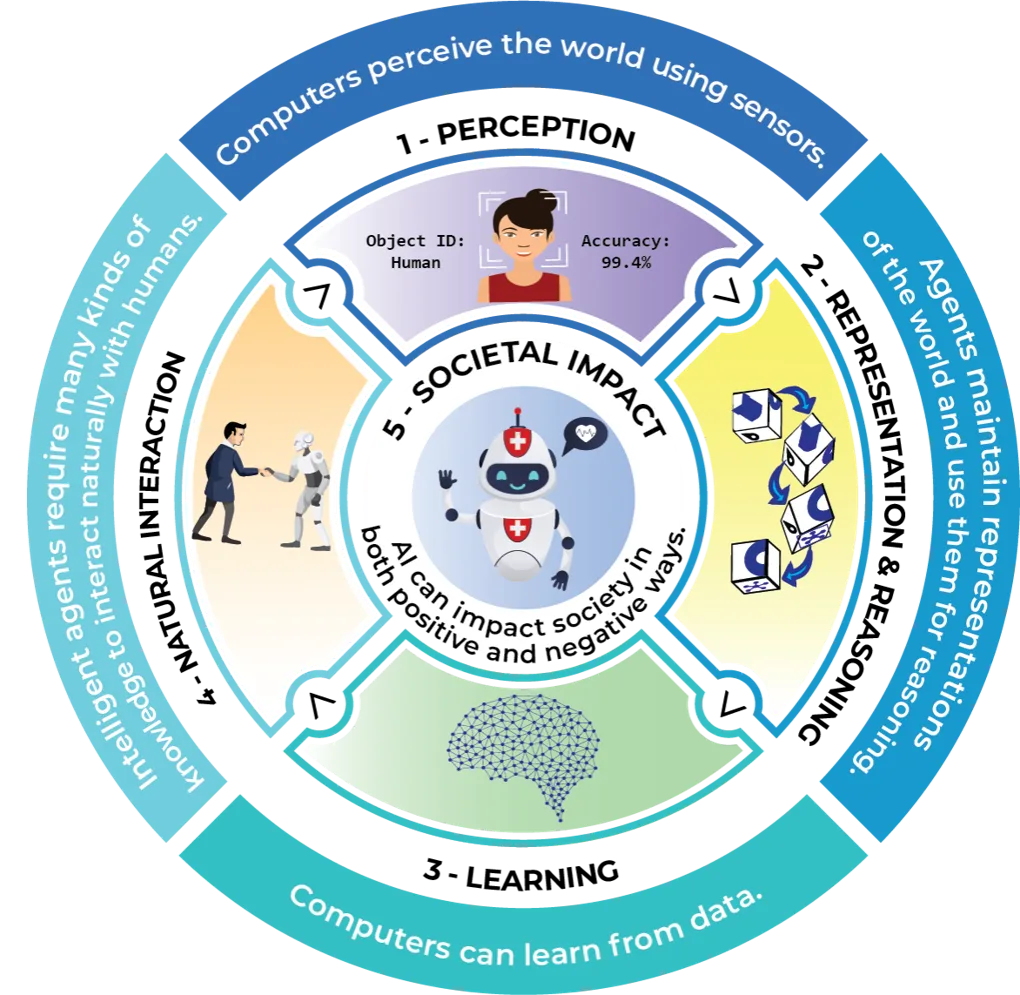
AI4K12’s framework for AI development, referenced in the TeachAI featured article
“In 2005, Shane Gero, biology lead for Ceti, founded The Dominica Sperm Whale Project to study the social and vocal behaviour of around 400 sperm whales that live in the Eastern Caribbean. Almost 20 years – and thousands of hours of observation – later, the researchers have discovered intricacies in whale vocalisations never before observed, revealing structures within sperm whale communication akin to human language... After studying almost 9,000 recordings, the Ceti researchers identified 156 distinct codas. They also noticed the basic building blocks of these codas which they describe as a "sperm whale phonetic alphabet" – much like phonemes, the units of sound in human language which combine to form words."
“At a time when the entire education community is grappling with how to realize the benefits of AI while mitigating the risks, the briefs that compose Guidance on the Future of Computer Science Education in an Age of AI serve as the beginning of a discussion rather than definitive answers. The briefs offer preliminary insights for responsibly and effectively integrating AI into primary and secondary CS education, address common misconceptions, and provide a balanced perspective on critical issues.”
“Attempts at lying and falsification have existed since the beginning of history. In fact, history may depend on them. Part of our job is to sort through error, and try to find truth, if possible.”