Many helpful articles in a week otherwise dominated by other news.
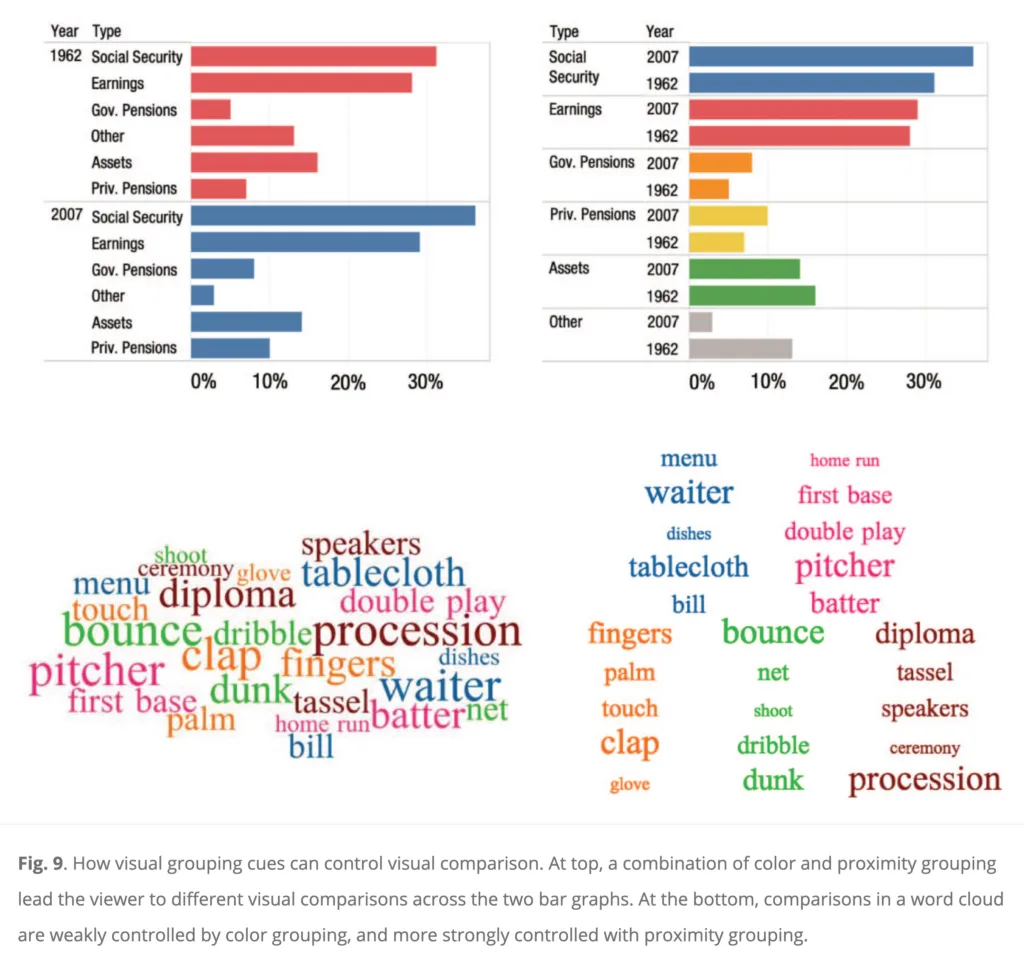
In this week’s features, find a curated collection of resources on universal design for learning. Whether you’re newly interested in the subject and looking for a basic grounding or you’re familiar with it and looking to deepen your mastery, you can find good resources here. Also in the features find a helpful study about effective approaches to communicating around data. This research report is as useful for teachers as for students — anyone interested in effective visual communication techniques will find nuggets of good advice. See below for an example.
Elsewhere, find a trio of helpful articles about assessment at various levels, a range of pieces on reading and writing, and the current state of cellphone bans in the US by state.
Also, are you an international school teacher? One reader is doing research on differentiation practices at international schools. Please consider taking this two minute survey.
And as ever, find this week’s headlines about what’s happening in AI.
These and more, enjoy!
Peter
PS. Teachers and administrators, I’d be grateful to learn more about how you plan and how you support teaching & learning. Would you share 20 minutes to tell me about your work? Here is a link to schedule a 20 minute zoom call. Thank you!
Effective visual communication techniques, from this week’s second feature
Psychological Science In The Public Interest · 12/15/21
“We review research-backed guidelines for creating effective and intuitive visualizations oriented toward communicating data to students, coworkers, and the general public. We describe how the visual system can quickly extract broad statistics from a display, whereas poorly designed displays can lead to misperceptions and illusions.”
“Universal Design for Learning (UDL) seeks to eliminate barriers to learning based on research on how people learn. It's an inclusive approach that recognizes student strengths and provides flexibility in how students access and engage with material and show what they know.”
“Visual Thinking Strategies (VTS) is an educational non-profit that trains educators in schools, museums, and institutions of higher education to use a student-centered facilitation method to create inclusive discussions. Our intensive professional development programs provide individuals with the tools to become skilled facilitators of complex conversations. Our accessible classroom curricula are supportive of critical thinking, visual literacy, communication, and collaboration skills.”
“Leopold von Ranke (1795–1886), the founder of source-based history, is usually credited with the “invention” of the scholarly footnote in the European tradition. Grafton describes von Ranke’s theory as sharper than his practice: his footnoting was much too sloppy to be a model for scholars today. But various forms of footnotes were used long before von Ranke.”
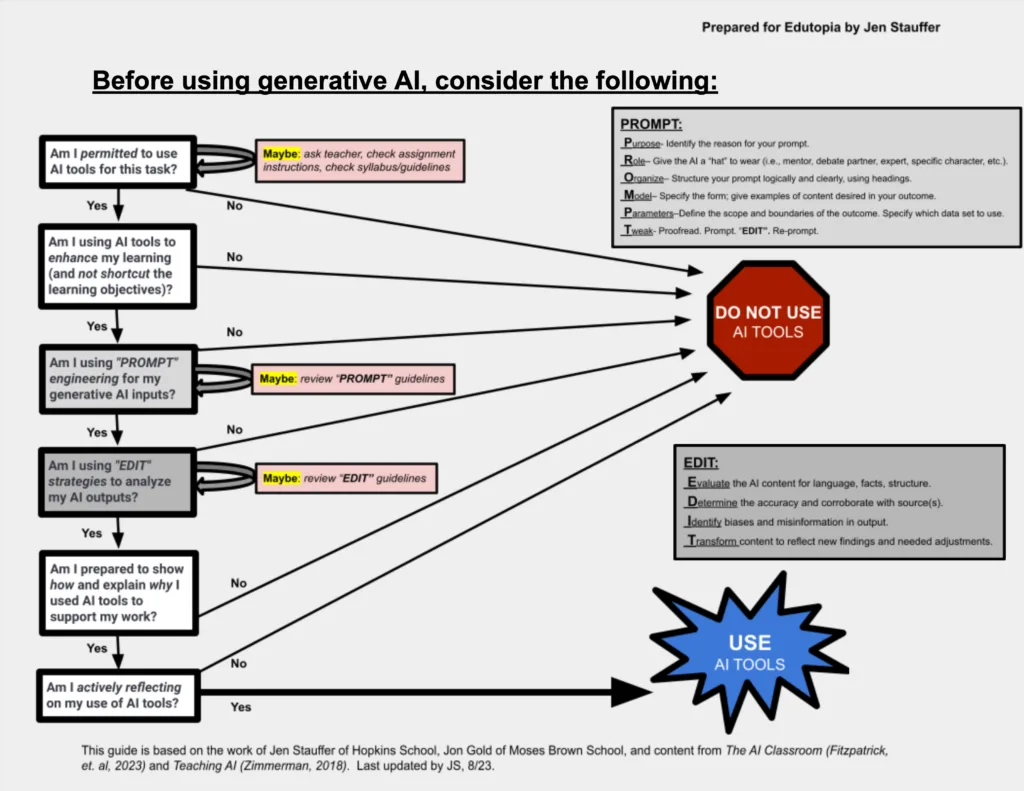
In the features, find Marc Watkins’ helpful reflection on the importance of conversations about AI. Watkins walks through the different types and sequence of conversations that may be most likely to happen, including around academic integrity. Also find a helpful decision tree from Edutopia (shown below) that walks through the decision we should be scaffolding for students. It’s a helpful visual guide.
Elsewhere, AI for Education’s webinar on AI image generation for educators is helpful, the NEA releases a lengthy report with AI guidance for schools and teachers, and Stanford and Goldman Sachs both release high level industry reports.
“To aid teachers and students in responsible Al use, we have collaborated on a decision tree for student decision-making. This framework can help students make better choices about using AI tools and give teachers more confidence in supporting student use.”
“The conversations we need to have about generative AI include our students, administration, and our colleagues. I won’t sugarcoat any of this—these conversations will be a continuum lasting years. They will be frustrating because they may not appear to do anything at first, but that’s because human beings aren’t like machines—we’re slow to change and that’s a good thing. Each interaction we have with one another shapes our thinking about genAI’s impact on teaching and learning. We should not dismiss the small conversations as meaningless. What we should do is recognize the amount of time and energy it takes to simply talk about AI.”