The humanities as a parlor, research-based education, AP Business, and more
A good week —
In this week’s features, find a report in the NYT on Ken Burns’ upcoming series on the American Revolution. Learn about how he navigates today’s politically charged times. Also in the features, find a review in the LA Review of Books of several texts focused on close reading. Most interesting to me in the review is an (apparently) well known metaphor describing participation in the humanities as part of an eons-long parlor conversation. It’s more eloquent than I have written here, and it nicely frames the work of humanities classes in the context of our ongoing search for meaning — and then situates close reading as an essential part of that conversation. A worthy read.
Also this week: learning science, a new approach to assessment, cell phone policies, and more.
PS. Here are some upcoming travels. Drop me a line if you’ll be at any — it would be great to say hello!
- January 11-14 – FETC (Orlando, FL)
- February 25-27 – NAIS (Seattle, WA)
- March 9-12 – SXSW EDU (Austin, TX)
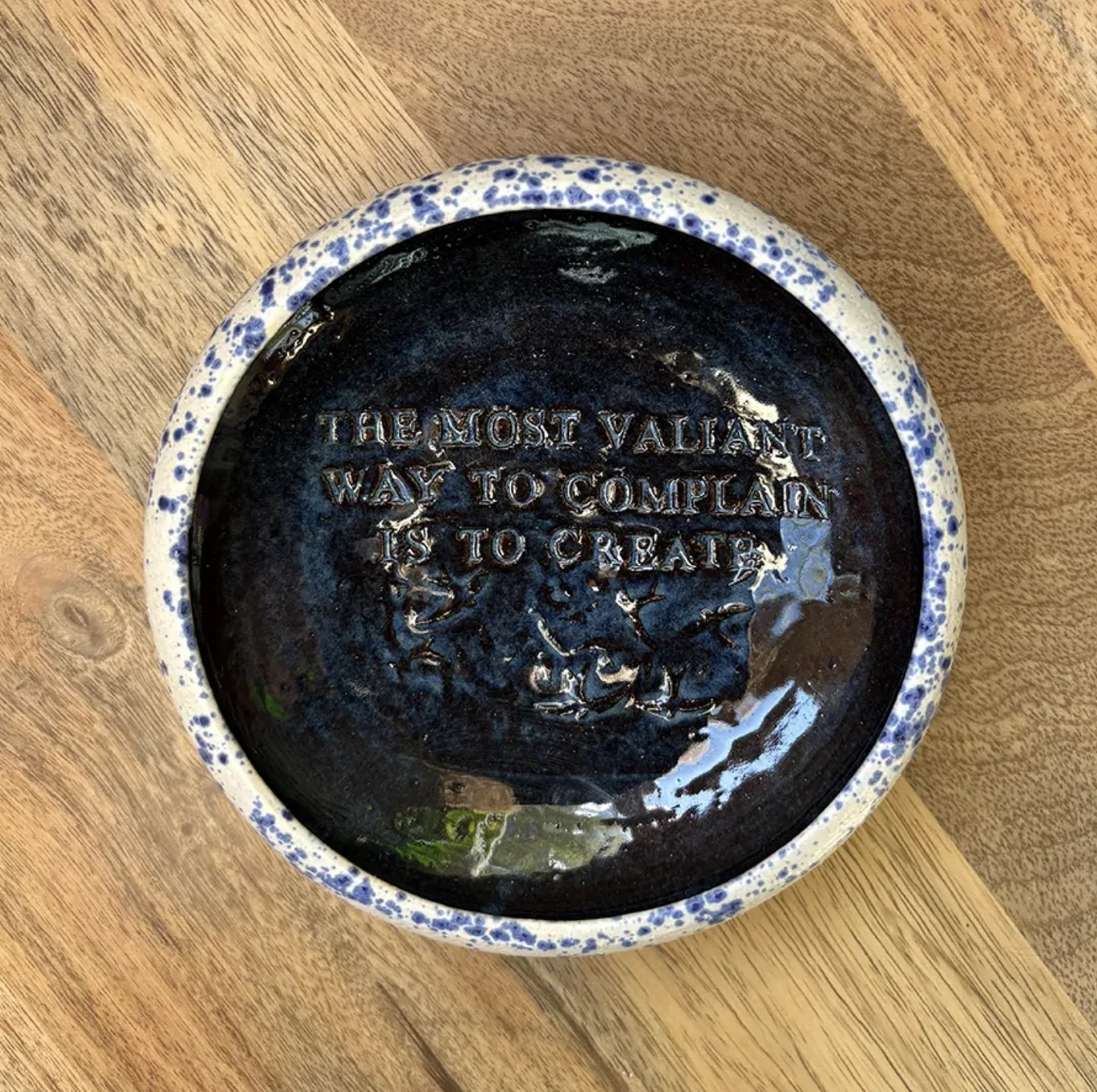
The Marginalian (formerly Brain Pickings) celebrated its 19th birthday last week, and its creator made a number of delightful bowls from phrases she wrote over the years. See the post in General for more.
“Imagine that you enter a parlor. You come late. When you arrive, others have long preceded you, and they are engaged in a heated discussion […] You listen for a while, until you decide that you have caught the tenor of the argument; then you put in your oar. Someone answers; you answer him; another comes to your defense; another aligns himself against you […] However, the discussion is interminable. The hour grows late, you must depart. And you do depart, with the discussion still vigorously in progress. The parlor is a promise: that analysis and argument are part of an “unending conversation” that, though begun long before us, is one to which each of us can contribute. We are mortal, but the conversation is not. If anything, we can depart the parlor confident that the conversation will go on indefinitely.”
“The filmmakers’ main concern wasn’t politics or historiography, but something more basic: How do you make a compelling documentary with no photographs, no newsreels, no living witnesses and a visual record that reads to many Americans as starchy and boring? …That approach is very much in keeping with the latest scholarship, which depicts the Revolution as a hyper-violent civil war that divided families and communities and left many Native Americans and African Americans worse off, and less free. And the film doesn’t demonize loyalists, who were sometimes subjected to horrific retribution… But for many viewers, the most eye-opening part of the documentary may be the centrality of Native Americans. They are presented not as victims or bystanders, but as members of powerful nations faced with complex choices about how to defend their own liberty.”
“My final pitch for maps is that in a world that is increasingly online and AI-heavy, there’s something pleasingly counter-cultural about going analog with map construction. It helps students make connections they wouldn’t otherwise make, provides an entry point to deep, worthwhile conversations, and offers students an opportunity to exercise their creativity.”
AI for assessing writing, AI and the environment, AI browsers, and more
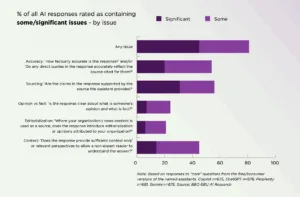
In this week’s features, find a report co-sponsored by the BBC on how effective AI tools are at reporting the news. (Hint: not great.) It’s a useful check in on AI works in general-purpose functions, like as a web browser itself. (See two other posts on this further down.)
Also in the features, find a thoughtful look at AI’s impact on the environment. Note that this report doesn’t simply make claims about water consumption, but instead looks at how minor conveniences in our lives, when brought to scale, can have major impacts on the world and other people. It’s an interesting post that works just as well in the Sustainability category.
Also this week in AI: a report about how effective AI is at assessing writing (quite good, if designed well), a framework for teaching writing in a time of AI, reports on how AI is and is not replacing jobs in the workplace, and more.
These and more, enjoy!
Peter
How accurate is AI at reporting the news? See how many issues are in each article in the graph above, and find more in the feature.
“Research has confirmed the growing role that AI assistants play in digital news consumption – around 7% of people now use AI assistants as a source of news, rising to up to 15% of under 25s.”
“The supermarket story is not an argument to reject convenience wholesale. Supermarkets solved real problems. But their evolution also shows how immediate gains accumulate into systemic consequences — environmental, economic, and cultural — that were not obvious on day one. AI in education may bring benefits, but the question for school leaders is whether those benefits outweigh long-term costs, and whether we can deploy the technology in ways that preserve alternatives, protect learners, and limit ecological harm.”
“O — Ownership Through Reflection: Asking students to explain their writing decisions helps them develop their own voice and take responsibility for their writing choices, and serves to motivate them. Brief oral presentations can advance this sense of ownership as well as tie accountability to both their instructor and peers.”
“We asked the LLMs to make Comparative Judgements instead. They have to read two pieces of writing and choose which is better, and we can then combine together all of these decisions to create a very sophisticated measurement scale for every piece of writing… This approach is much more effective, and results in very high levels of agreement between our AI and human judges.”