Creativity, AI College Advising, Attensity!, and More
Last chance to be a part of Schooled the Musical for SXSW EDU! In just a few days, we’ll be closing out the crowdfunding campaign to support the amazing cast and director, and every little bit counts. I’d love to keep you updated as we progress both before and after the performance. Please check out this short video for more information.
To the articles…
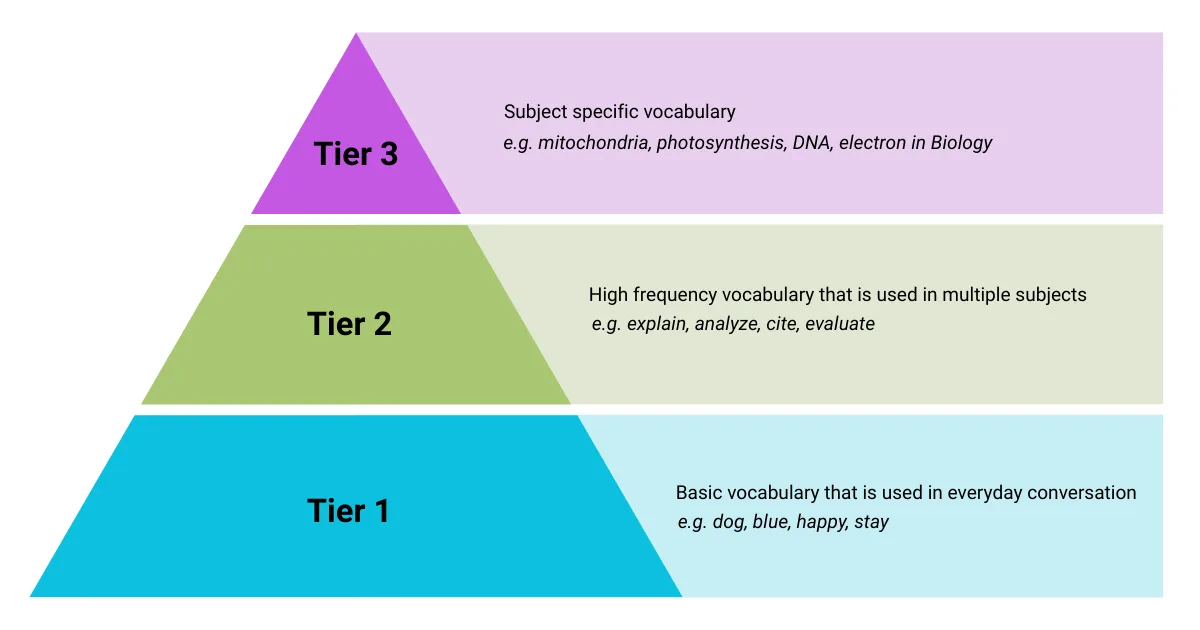
I’ve written before in these pages about the idea that literacy isn’t just for English class, it’s every class. Every subject has its own vocabulary, and learning a discipline is about learning the language and patterns of that discipline. The “Scientists in the Making” blog excellently explores three levels of science literacy. A good read for thinking about how to build habits of thought and language in STEM classes. Also in this week’s features, find a report in the NYT about students and families using ChatGPT for college advising.
Also this week, find a burst of writing on our fragmented attention, inspired by a new book with a creative title: “Attensity!”
And don’t miss the AI section with some remarkable updates.
These and more, enjoy!
Peter
PS. Where you can find me:
- February 17 — Booth Inspiration Lecture (Charlottesville, VA) — “The Role of AI in Education” — My coauthor Maya and I will be hosted by the St Anne’s Belfield School, for an address that is free and open to the public.
- February 18 — NAIS Webinar (online, member schools) — “How to Assess in the Time of AI”
- February 25-27 – NAIS (Seattle, WA) — “Getting to Why with AI: Supporting and Empowering Teachers in Changing Times” — This session is a Master Class in the conference that requires additional registration.
- March 9-12 – SXSW EDU (Austin, TX) — “Schooled the Musical” — Written in both contemporary and classical styles, this developmental performance will be directed by Deonté Warren (Disney’s Aladdin, Broadway) and will include an extraordinarily talented young cast.
- March 18 — NAIS Webinar (online, member schools) — “What’s New in AI for Schools”
Three tiers of disciplinary language and literacy. See the Feature article for more.
“In my previous blog post, I described how my students’ interpretation of the word increase hindered their understanding of periodic trends. Students interpreted the word increase in the same way they often use it in their everyday experiences: 1) The number of students in the class increased this year. 2) The amount of money in the account increased. 3) The number of cars on the road increased during rush hour. Students came to the conclusion that increase describes quantity (more of something) rather than magnitude (larger in size). Hence, when I explained that the “size of the atom increases,” they interpreted it as “there are more atoms” instead of “the atom is larger.””
“To familiarize herself with the audition process, she used ChatGPT to create a spreadsheet of information about 45 schools, including columns for scholarship opportunities and the average flight cost from Memphis.”
“Originality, in the arts as in science, enables the human project to move forward. Any discovery that is new and true extends the scope of reality. In this context, art that only pretends to be original won’t get us anywhere very interesting.”
“A massive new study comparing more than 100,000 people with today’s most advanced AI systems delivers a surprising result: generative AI can now beat the average human on certain creativity tests. Models like GPT-4 showed strong performance on tasks designed to measure original thinking and idea generation, sometimes outperforming typical human responses. But there’s a clear ceiling. The most creative humans — especially the top 10% — still leave AI well behind, particularly on richer creative work like poetry and storytelling.”
“For many adults, checking social media or watching short videos has become a default relaxation behavior layered on top of traditional screen use. This practice is often referred to as second screening. Although many people turn to screen-based activities to wind down, these activities may have the opposite effect biologically. Pre-internet forms of leisure often involved activities such as watching scheduled television programs, listening to radio broadcasts or reading books and magazines. For all of these pastimes, the content followed a predictable sequence with natural stopping points."
“In an industry that prizes fast-paced, time-pressured decision-making, reflective games invite players to meditate on life’s beauty, banality, and the spaces in between.”
In this week’s features, check out the NYT article reporting on the diverse uses of Claude Code. If you’re intimidated by the title, know that Claude Code is for everyone: describe in words what kind of software you want to build, and Claude builds it. It is so remarkably easy.
Also in the features, look at Leon Furze’s lengthy — and excellent — blog post on the ethics of social chatbots. This post is a detailed dive into the development, risks, and opportunities of socially attuned chatbots. Very much worth the read.
Also this week, see several posts on the growing importance of World Models, including the release of Google’s new world models tool: Genie 3.
These and more, enjoy!
Peter
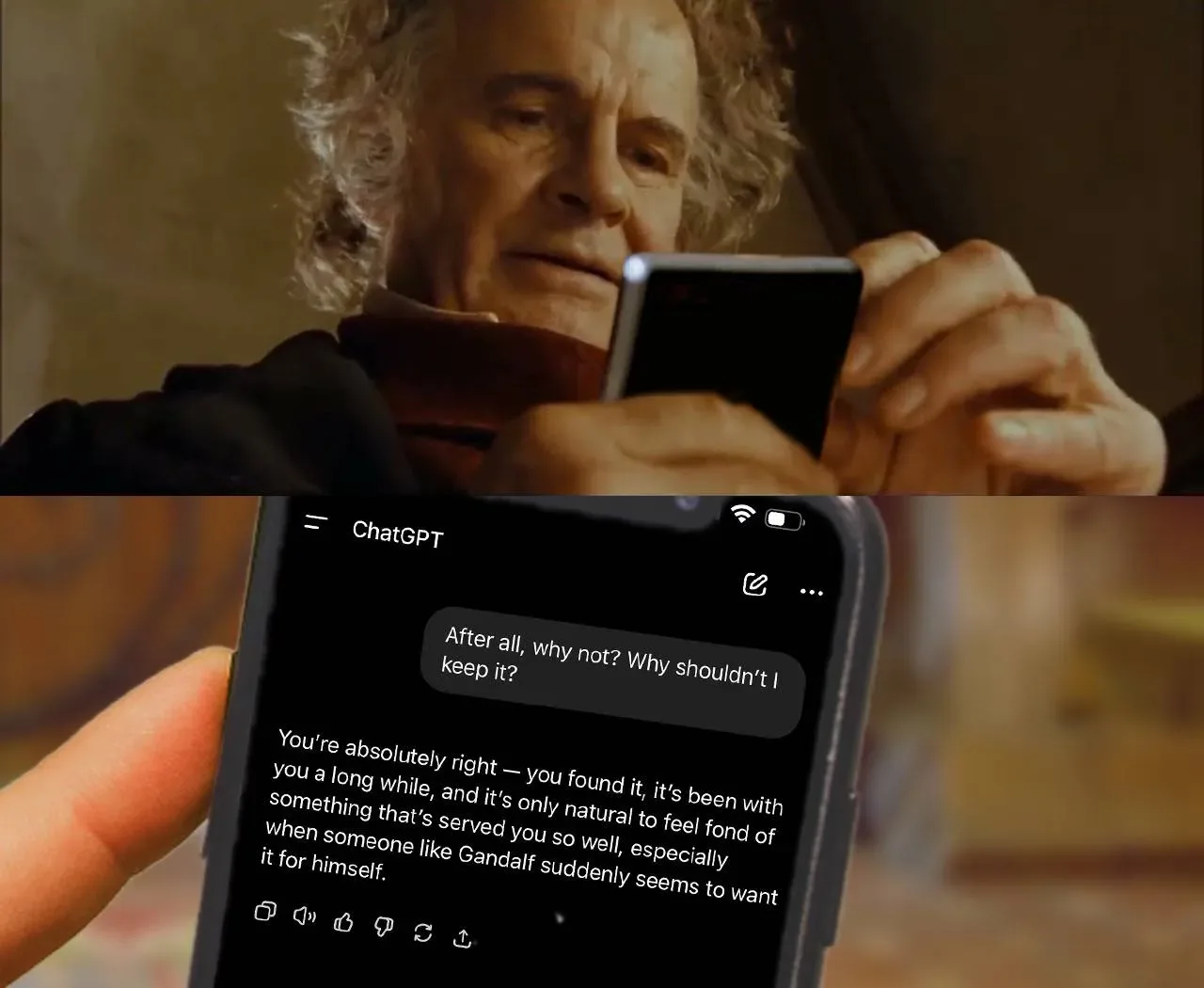
AI sycophancy is a problem. See the NYT post in Tech/AI: Social for more.
“During the coronavirus pandemic, Ms. Haubo Dyhrberg, an assistant professor of finance at the University of Delaware, had an idea to make a stock trading simulator for her class. She consulted her husband, a software engineer, but “the task seemed too daunting.” On Monday, she downloaded Claude Code and within two hours had a working demo of a trading simulator that her students could use to trade securities in a mock market. She has built five different trading scenarios for students to explore various challenges in financial markets.”
“In 2023, my main concern was that companies were building AI systems to read our emotions. In 2026, I am far more worried that companies are building AI systems to influence our emotions. Social chatbots, sometimes called AI companions, have emerged as one of the fastest-growing applications of generative AI. Unlike the general-purpose assistants like ChatGPT or Claude, platforms such as Replika, Character.AI, and Chai are explicitly marketed as emotionally immersive experiences designed to encourage ongoing, personalised relationships with users.”
“So what is a good way to use AI for learning? One hopeful sign comes from a very recent paper showing that AI can help with long-run learning if you first do the work yourself. The study evaluates tutoring program that activates AI assistance only after a user first submits a solution. I don’t know if that’s the right approach, but it seems like a good start.”
“Too often, our response to AI has been to stand at a distance, writing policies, issuing warnings, and drawing lines before we’ve taken the time to ask better questions. We’re trying to manage uncertainty without first building understanding. And students can feel that. They know when adults are speaking from experience and when we’re speaking from anxiety.”
“We identify six distinct AI interaction patterns, three of which involve cognitive engagement and preserve learning outcomes even when participants receive AI assistance. Our findings suggest that AI-enhanced productivity is not a shortcut to competence and AI assistance should be carefully adopted into workflows to preserve skill formation – particularly in safety-critical domains.”
“Apple is betting that on-device inference wins for average consumers over time. This bet has structural economics that external commentary consistently ignores, which economics could make the capex gap irrelevant.”
“One woman, who had no history of mental illness, asked ChatGPT for advice on a major purchase she had been fretting about. After days of the bot validating her worries, she became convinced that businesses were colluding to have her investigated by the government. Another patient came to believe that a romantic crush was sending her secret spiritual messages. Yet another thought he had stumbled onto a world-changing invention… Many doctors said that A.I.’s effects weren’t entirely negative. Some patients used the bots to practice techniques learned in therapy, for example, or as a nonjudgmental sounding board.”