Does video work for learning, an APUSH alternative, on tech in education, and more
A brief but excellent issue.
In the featured articles, find a deep look at the effectiveness of video in instruction. When and how is video useful? Does AI-generated video work for learning? This post is a measured pedagogical deep dive. Later in the issue, find also a reflection on Khan Academy’s strengths and weaknesses.
Also in the features, find the NYT’s report on Florida’s new alternative to AP US History. In our politically charged time, I wonder if this is a one-off event, or if it is the beginning of some larger fragmenting.
Elsewhere in this issue, find discussions about pedagogy experts in higher ed, an interesting framework for student performance, more on the tech backlash, how constraints fuel creativity, and others.
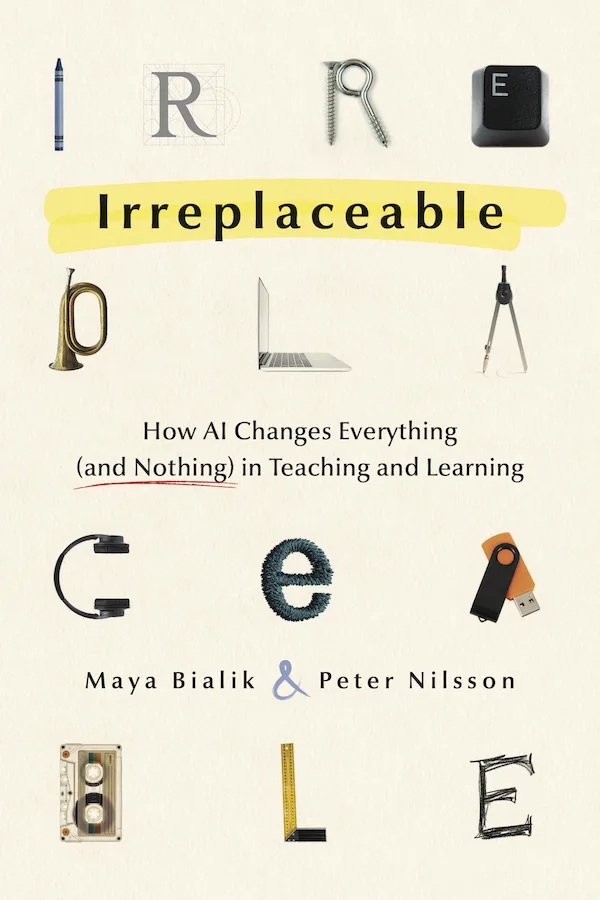
The tech backlash is still growing. It’s something we wrote about in Irreplaceable. Chapter 4 starts like this:
> “The history of educational technology is littered with the husks of AI tutors, their innards hollowed out by broken promises to revolutionize and personalize learning. These teaching machines revive like zombies, fed by the new technology of each era, intoning again and again, “This time, we will automate tutoring for every student. This time, it will be different.” Until, like the zombies before them, they, too, heave and collapse, leaving their carapaces hanging on walls of classrooms, languishing in warehouses, or boxed in the corners of researchers’ labs — only to be revived anew, lurching back into and then out of educators’ lives again and again with the emergence and obsolescence of each new technology.
>
> “If this reads like a horror story, it’s because for some educators, the arrival of a new technology is a source of dread. This is especially true for teachers who have put faith in technologies that ultimately added layers of complication to their lives without substantially improving outcomes or workflows.” (p. 95)
The start of chapter four concisely examines the history of unsuccessful teaching machines, how they have been misaligned with how humans learn, and how the current developments with AI may offer a new direction. It explores how humans learn through head, heart and hand via relational, multi-layered learning experiences, and then looks at how AI interacts with this multi-layered experience and what the implications are for our pedagogy. As with every chapter of the book, it looks at teaching and learning first, and then how AI fits within effective, human-centered practice.
In this moment of technological change, when some schools are leaning in and others backing out, we hope this book will offer a grounding for when and why a school might move in one direction or the other.
All this and more, enjoy!
Peter
Irreplaceable is available with increasing discounts as orders grow, starting with orders of ten or more copies.
“The instructor-presence literature was built on the premise that the instructor is a human being whose social, emotional and pedagogical signals carry information. AI-generated instructors decouple presence from instructorhood: the face is real to the viewer but not real in any other sense. None of the canonical instructor-presence findings have been re-tested under this condition. The early evidence suggests cognitive-outcome equivalence; the open question is whether the social-emotional effects that originally made instructor presence “matter” survive at all when the instructor does not exist.”
“In the ongoing debate about whether American history classes should lean more toward presenting the country as a “good, special place” or as a “fundamentally imperfect place,” he added, the framework clearly comes down on one side. “This is a very explicit attempt to frame it as the former,” he said. Here are some of the ways the Florida course does that.”
“I should be honest about what that hope actually is. It is the belief—irrational, stubborn, and not entirely unlike the thinking I have been indicting throughout this series—that if we accumulate enough good programs, enough pockets of genuine human engagement, the system will eventually tip toward something better.”
“These physics-based challenges to the infinite tend to delight ultrafinitist mathematicians, who hold them up as evidence that their mathematics is a truer description of reality.”
AI detectors, AI in the emergency room, AI ethics and more
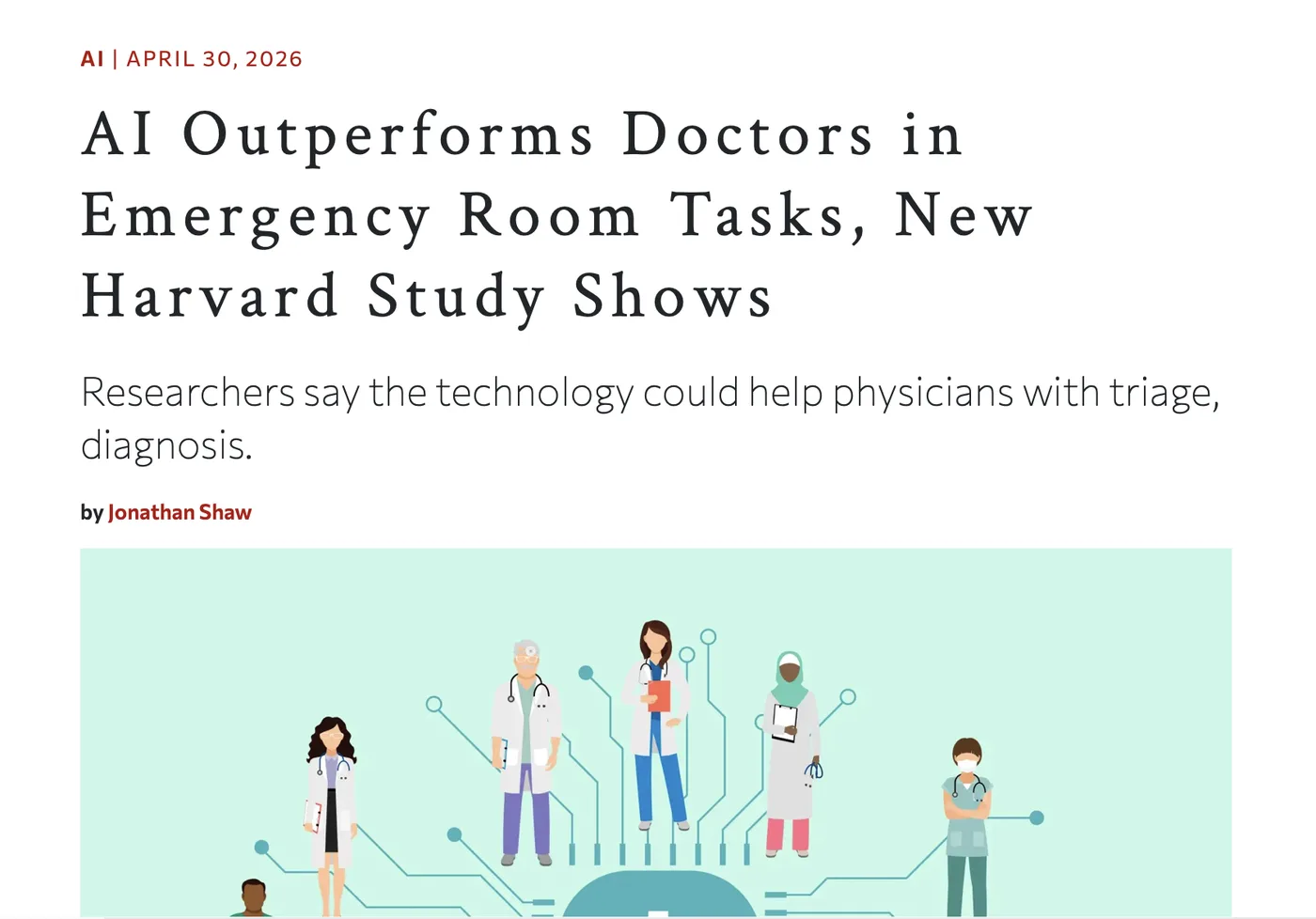
In the features, Marc Watkins makes the risks of AI detectors real in his narrative of how an AI detector plug-in changed his experience of navigating the web. Also, see the Harvard study on the effectiveness of AI in emergency room tasks.
Also, find a robust section on ethics and risk this week. Several posts sound off on the likelihood (or not) of AI taking on many human jobs. Others examine bias in AI, the ongoing consideration of catastrophic risk from AI, and what the backlash against tech looks like and means.
These and more, enjoy!
Peter
In what settings can AI strengthen human performance? See this report for nuance not on if, but when and how.
“Evaluations were performed by two doctors who did not know whether the ER assessments had been made by the AI model or by two expert attending physicians. Those reviewers found that o1 preview matched or exceeded expert human performance across each stage. The AI was particularly good at making assessments at the initial triage stage, when there was the least information available, the study notes.”
“Unfortunately, the fleeting promise of discovering what posts contain AI text across your socials comes with a series of tradeoffs and potential problems. Deep ones. For starters, I had to put my trust in a technology company using a different form of AI to tell me if the accounts I was interacting with were likewise using AI. I’m not keen on turning to scenarios where AI becomes a solution to fix the problem a different form of AI created across my social networks. But these issues are not just limited to trust.”