I hope you’ve had a restful, productive, inspiring time since the last newsletter. Here in this issue, find a selection of pieces from the last few months to ease you back into the year.
In the features, find a fascinating development at UChicago. You may recall that just at the beginning of summer, the UChicago president announced that every student, faculty, and staff member would have access to a Claude account, as part of a commitment to teaching “how to think with machines, how to think without them, and how to think about them.” Interestingly, later in the summer, the Law School at UChicago banned all technology in first year classrooms. It’s not an overall ban of use of devices — just in classes. This pedagogical move offers a provocative point of reference when thinking about when and why devices might be useful and might not be useful. They note their “longstanding tradition of emphasizing the Socratic Method” — a helpful reminder that some forms of mastery are often best assessed through dialogue and live performance.
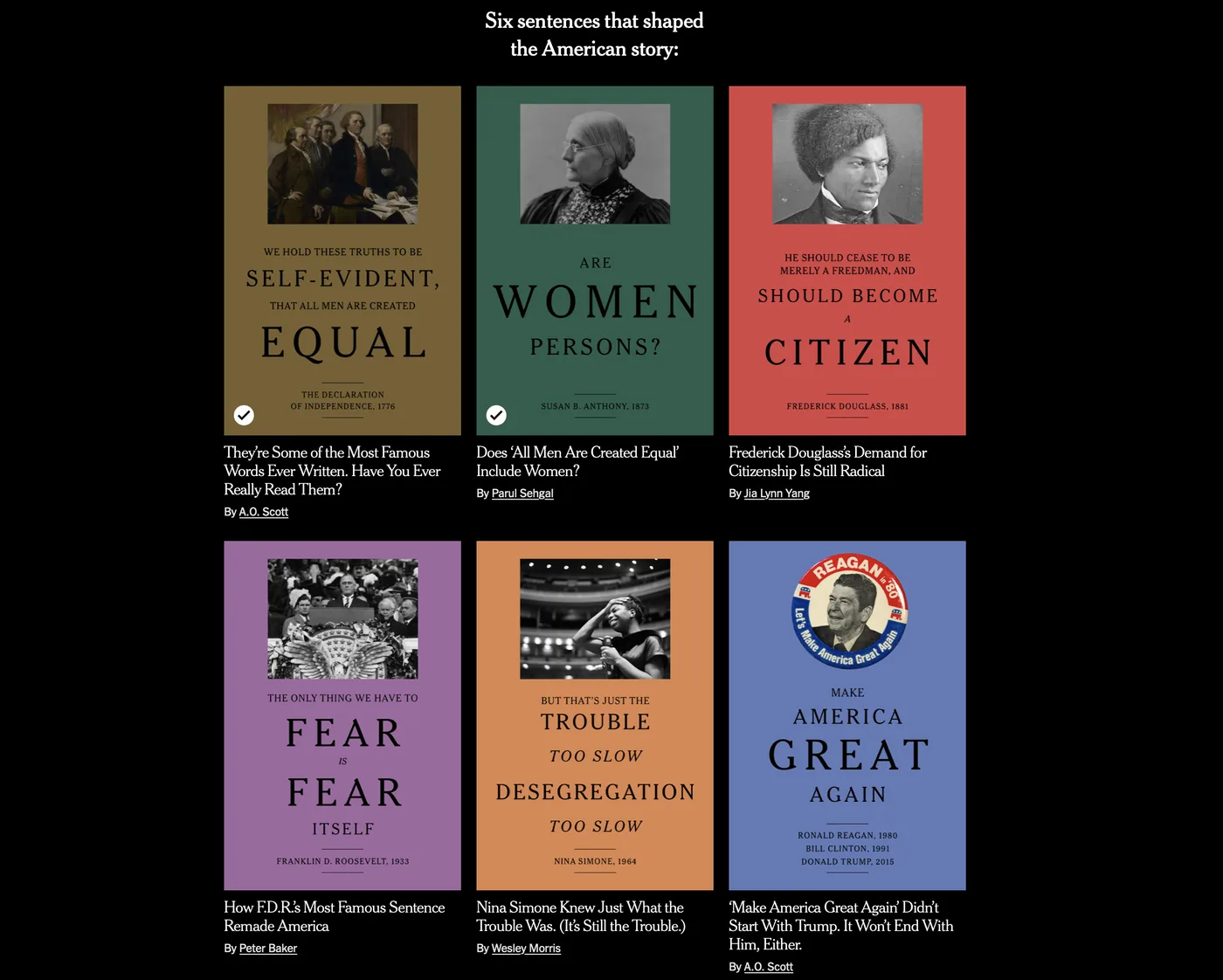
Also in the features, find a striking article on when and why students turn to AI for conversation. Additionally, in the spirit of the 250th birthday of the USA, find a post from the NYT about six sentences that have shaped the story of this country.
Elsewhere this week: in the spirit of the World Cup, find a tribute to the mathematically wonderful soccer ball (in STEM); in the spirit of professional development, find signups for free reading groups on great books (in PD); in the spirit of testing, find a NYT editorial (perhaps surprisingly) advocating for the SAT (in Assessment); and much more.
Then later in the AI update, see a remarkable effort by students to develop a national AI policy for schools. It’s not perfect, and it’s sometimes self-contradicting, but it quite wonderfully represents what they are thinking about in relation to AI — and it demonstrates their respect for their teachers.
More generally, I hope to be returning to a regular cadence of newsletters, either weekly or every other week. To that end, if you find this useful and think some of your new colleagues or leadership team might find it useful, too, please pass this along.
All this and more, enjoy!
Peter
Six sentences that shaped the American story. See the feature below.
“I started using it once, I guess, I realized people got tired of me complaining about the same thing over and over again. And I didn’t want to keep burdening people about the same issue.”
“Now, 250 years after the Declaration of Independence, we look at six sentences that shaped the American story — taken from a founding document, an incendiary speech, a classic autobiography, an inaugural address, a protest song and a baseball cap."
“Across all 1L sections, we will prohibit the use of electronic devices such as laptops, tablets, and phones in the classroom. There will be some limited exceptions to this policy. For instance, professors can designate classroom “scribes” who can use electronic devices to take notes for the class, professors can authorize electronic device use for specific tech-enabled activities (such as interactive in-class polling), and we will ensure that disabilities are accommodated in conformity with applicable law, as appropriate for the program of study. Additionally, examinations will be in-class without access to the internet, electronic files, or apps. And most of all, we will continue our longstanding tradition of emphasizing the Socratic Method as part of these courses. This coordinated approach reflects our experience, and an emerging scholarly consensus, that active, in-person engagement is conducive to learning. Reliance on devices to take notes or assist with answering questions tends to inhibit reflection and reasoning.”
“Once verified, K-12 educators in the US get access to Claude for Teachers with the Learning Commons connector and a set of tailored teaching skills grounded in learning science. The skills, co-developed with Learning Commons, were designed around the tasks teachers told us mattered most. These were evaluated to ensure rigor, pedagogical alignment, and classroom usability, and refined through early feedback from classroom teachers, including those in schools like Prospect Schools in Brooklyn.”
“California’s policy change was part of a national anti-testing push that has combined a vital concern with a fundamental misunderstanding. The concern is about the deep inequities in American education that particularly affect low-income, Black, Latino and Native students. Each of these groups scores below average on the SAT and ACT. The misunderstanding is about the reason for these gaps. The critics claim that the two tests are biased and therefore a cause of inequities. The evidence indicates otherwise. Raj Chetty, a Harvard University economist, points out that other tests show similarly large economic and racial gaps… The SAT and ACT obviously have their limitations. They measure reading, math and related skills, not creativity, grit or leadership. Yet they do appear to measure preparedness for highly selective colleges better than almost any other indicator, research shows.... The gaps in test scores accurately describe unacceptable inequities in American society…. The University of California is now rejecting students who would excel there, including low-income and minority students, and accepting growing numbers of students who flail.”
“Instead of focusing on creating opportunities for a small fraction of students to have artificially constructed conversations, I would be looking for ways to bring as many students as possible into regular contact with each other.”
“As allegations of LLM use rock the literary and media worlds, linguists explain what really distinguishes human and machine writing, while novelists including Jennifer Egan and Jeanette Winterson reflect on the future of fiction in an age of ChatGPT”
“A paper about the lost words, published earlier this year, has inspired intriguing theories. Valeria Pfeifer, one of its co-authors, speculated that spoken words have been supplanted by digital communication. This isn’t necessarily a bad thing; I text with a good friend in London almost every day, which keeps us connected when we go months without seeing each other. “Maybe I don’t have to talk to people about trivial matters anymore, and I’m judiciously pruning my communications to be focussed on those things that are more important,” Joshua Smyth, a health psychologist at the Ohio State University who was not affiliated with the study, told me.”
A national AI policy by students, Claude for Teachers, and more
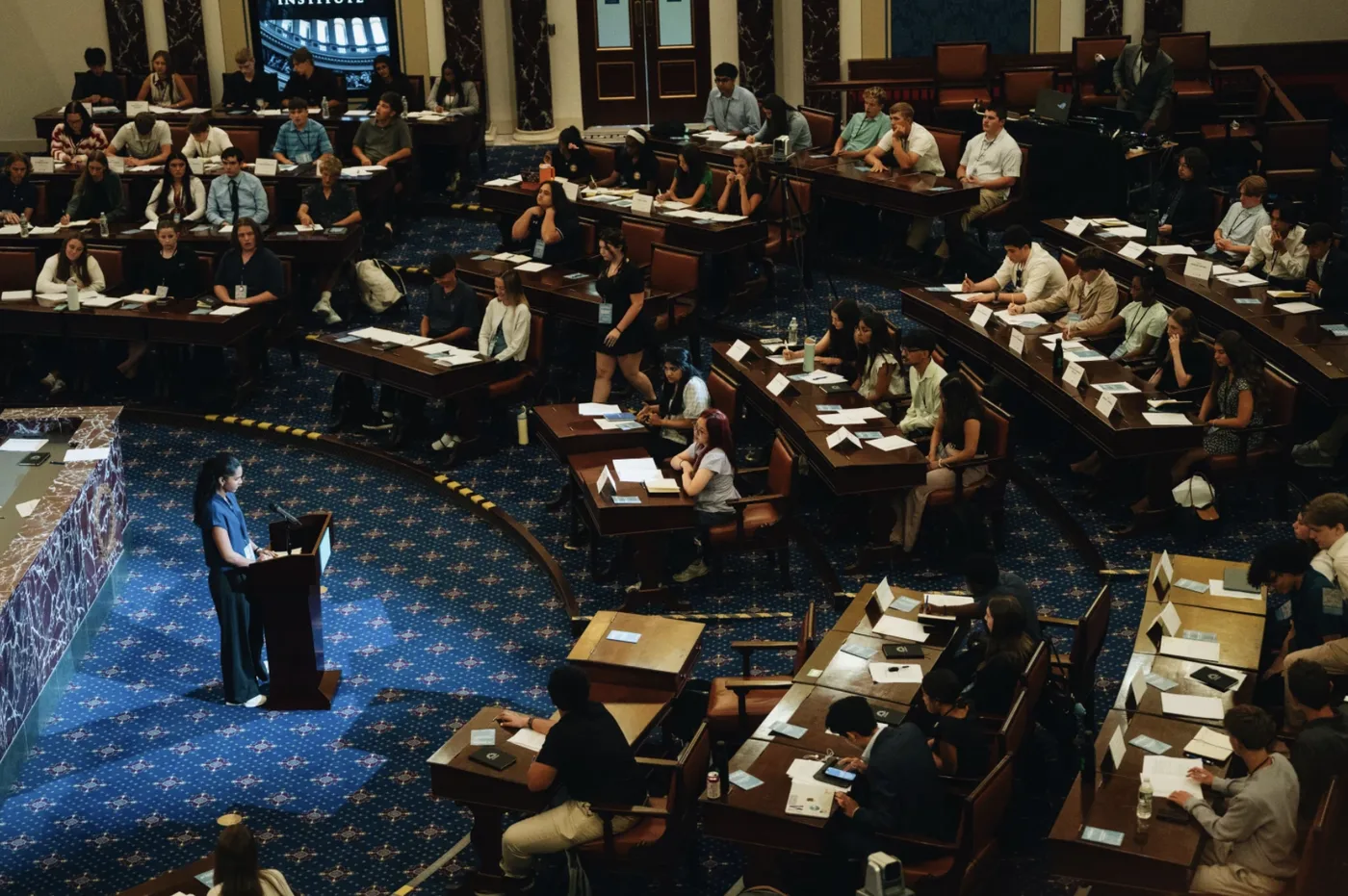
First in this week’s features, see the report by NPR on a student senate with representatives from 50 states that spent a weekend drawing together a proposed national AI policy for schools. It’s an excellent reference point and shows what’s on the minds of students today. The full bill is linked in the article.
Also in the features, see Anthropic’s release of a Claude for Teachers offering. I find it appealing for several reasons: not only that it’s free to teachers, but moreso that it is wired with knowledge of educational research. I appreciate, too, that they are focused on serving teachers and not yet trying to build a comprehensive system for teachers and students. That indicates an uncommon respect for educators in that they are seeking to support them rather than supplant them.
I’m also a fan of this offering because I find Anthropic to be the most responsible of the major foundation model companies (see the post in Ethics and Risk in which they were hiring 32+ roles for safety-oriented purposes). I use Claude for most of my AI work, I use Gemini occasionally for more routine search-like AI functions, and I almost never use ChatGPT.
Also in this issue: guidance on AI detectors, ways to think about when and when not to use AI, differentiation between human intelligence and machine intelligence, ways to make data centers more sustainable, and more.
All these and more, enjoy!
Peter
Students from across the USA convened for a weekend to develop a proposed national AI policy. See the feature for more.
“When students arrived at the start of the weekend, they were presented with a stew of policies that they had suggested in the run-up to the event. Then they were divided into subcommittees — focused on students, educators, administrators and families — to debate the dozens of proposals and create a coherent bill they could all support. The student-focused section of the final bill includes 15 provisions, several focused on a concern many of the senators shared: that teens are using AI to do their thinking for them… Among the bill's requirements: States should provide AI literacy as soon as students get access to classroom devices; AI use should be banned on all graded tests; and teachers can require an oral defense of any project from a student suspected of using AI inappropriately. (You can read the full bill at the end of this article.)"
““Write me an essay on the causes of the First World War” arrives carrying nothing but itself. Given an empty context, all I can return is the center of mass of my training data — the statistically comfortable average of everything ever written on the subject, smoothed into paragraphs.”
“If AI was hollowing out the learning of students, why was it so powerful for me? I resolved this eventually by realising that the two ideas were not opposed at all. They were the same idea seen from opposite ends of expertise. What gave me real clarity however (and to be frank, a kind of Damascene conversion), was visiting a highly unique school in the US with a group of other learning scientists and seeing how they were harnessing but also limiting the latent power of AI.”
“I leaned back and sighed. I hesitated: do I explain to Joe that the experiment is invalid, how and why it is invalid, or do I help him get to that conclusion by himself? There were still 2 weeks left in the quarter, so I decided to give him a chance. I told him that I see problems here, but that if I tell him the problems myself, he will get an F in the course. I gave him the option to go study what Claude did, enough for him to be able to tell me what the problems are.”
“The right question for me is not how we make the AI more like the brain. It is what this new system, with its own quite different trade-offs, can do that the human brain cannot, and how we marry the two. Working memory bottlenecks are an evolved compromise, not a target to engineer towards. The fact that the AI does not share them is the opportunity. Spaced retrieval is harder for the human brain than for the model; that is exactly why the AI can scaffold it. Generation of worked examples at scale is trivial for the model and impossible for the classroom teacher; that is the lever.”
“As generative AI becomes more common in schools, educators are increasingly being asked to make decisions about student work that may involve AI. While AI detectors can seem like a straightforward solution, current research shows they have important limitations and should not be relied on as the sole evidence of academic misconduct. This new resource summarizes what the evidence says about AI detectors and provides practical, research-informed guidance for responding to potential AI misuse. It also highlights proactive strategies that can help schools strengthen assessment practices and build AI literacy.”
“The greater domain expertise a person brings to a session, the more work Claude does per instruction. On coding tasks, every major occupation succeeds––accomplishes what the person set out to do, with verifiable evidence like passing tests or committed work––at nearly the same rate as software engineers, on average. The more domain expertise a person has, the more often the session ends in success—though the gap between intermediate and expert users is modest.”