Research backed inclusion curriculum, intrinsic motivation, addressing cognitive offloading, and more
A brief issue with some excellent selections this week:
In the features, find research about a diversity and inclusion curriculum emerging from Stanford that aims to strengthen ties across difference by emphasizing elements of our broader shared humanity. It explores the role education can play in advancing this perspective. Also in the features, find an excellent reflection on the role of intrinsic motivation in powerful learning.
Also this week, find in the AI Update the best post I have seen to date on managing cognitive offloading in lesson design.
Elsewhere in the main issue: some excellent content specific items in the humanities, several helpful articles on Executive Function, and more.
Also: the New York Times has now removed all caps on sharing gift articles, so every NYT article in the Educator’s Notebook going forward (or until they change their policy) will be viewable even if you don’t have a NYT subscription.
These and more, enjoy!
Peter
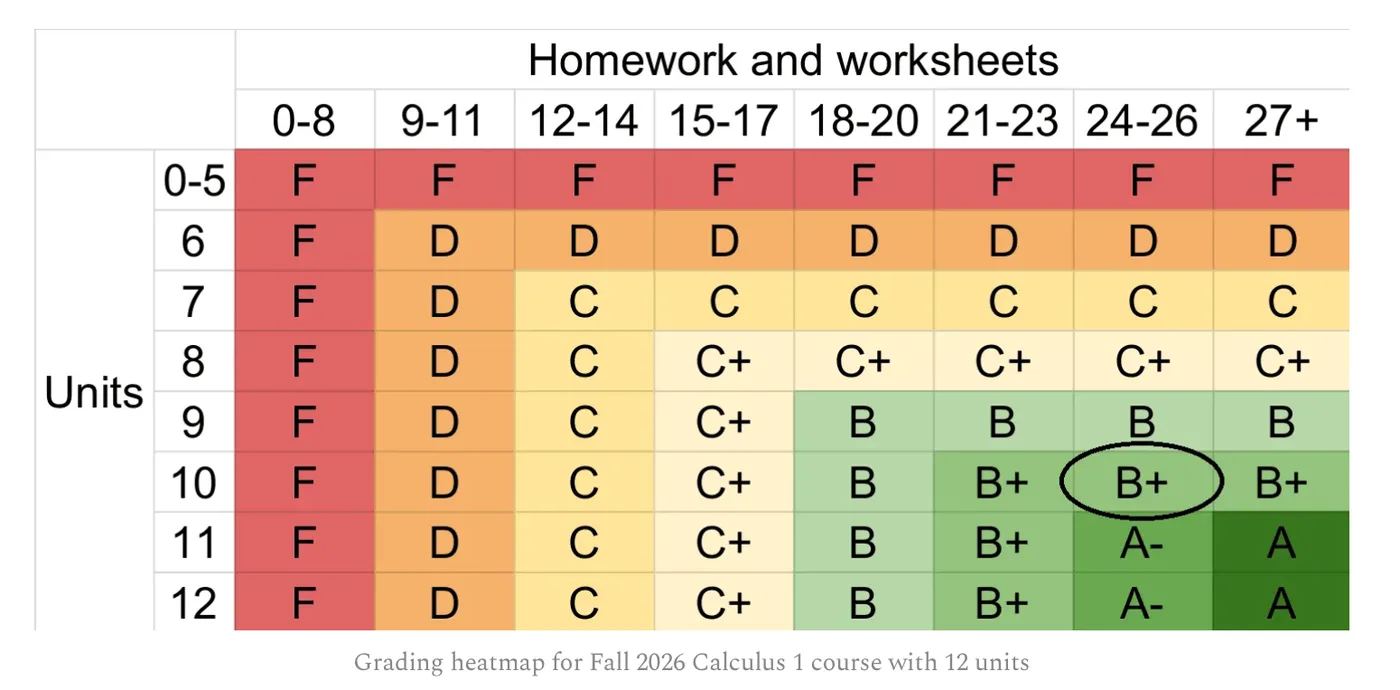
Will using this heat map make grading easier? Explore the idea in the Assessment section.
““The goal is not to weaken people’s identification with particular communities, but to help them see those identities as part of a broader shared humanity,” said Prashant Loyalka, an associate professor at Stanford Graduate School of Education and one of the study’s authors. “Societies progress when relationships among people from different backgrounds grow stronger. This study shows that education can play an important role in strengthening those ties and, in turn, our capacity as a society to develop and prosper.””
“Human beings are naturally curious creatures - we want to learn new skills and new things all the time. Throughout the bulk of human history, the motivation was not external validation in the form of grades. It was something deeper, more primal, and fundamental, often life-saving. My teaching log for my graduate program in the late 90’s included this provocative question: Think back to a time when you had a high level of success in learning something that you feel was challenging to you. What was the nature of the learning situation that enabled you to master these difficult ideas or skills?”
“The use of “Slaveholders’ Rebellion” began early. Senator Samuel Pomeroy’s July 1861 bill to “suppress the slaveholders’ rebellion” was one instance. But the language was subject to debate. One senator who later defected to the Confederacy said it created “odium and prejudice against a particular interest” — that is, slavery.”
“The heads who survive and build meaningful legacies tend to share certain qualities, instincts, and ways of working. They know how to hold and realize a vision, manage board relationships, read a school’s culture, hire for mission, and choose their moments carefully. These characteristics enable them to move beyond the fragile early years of leadership and serve long enough to shape the future of their schools.”
Lesson design to avoid cognitive offloading, 15 ways to use Claude, existential risk, and more
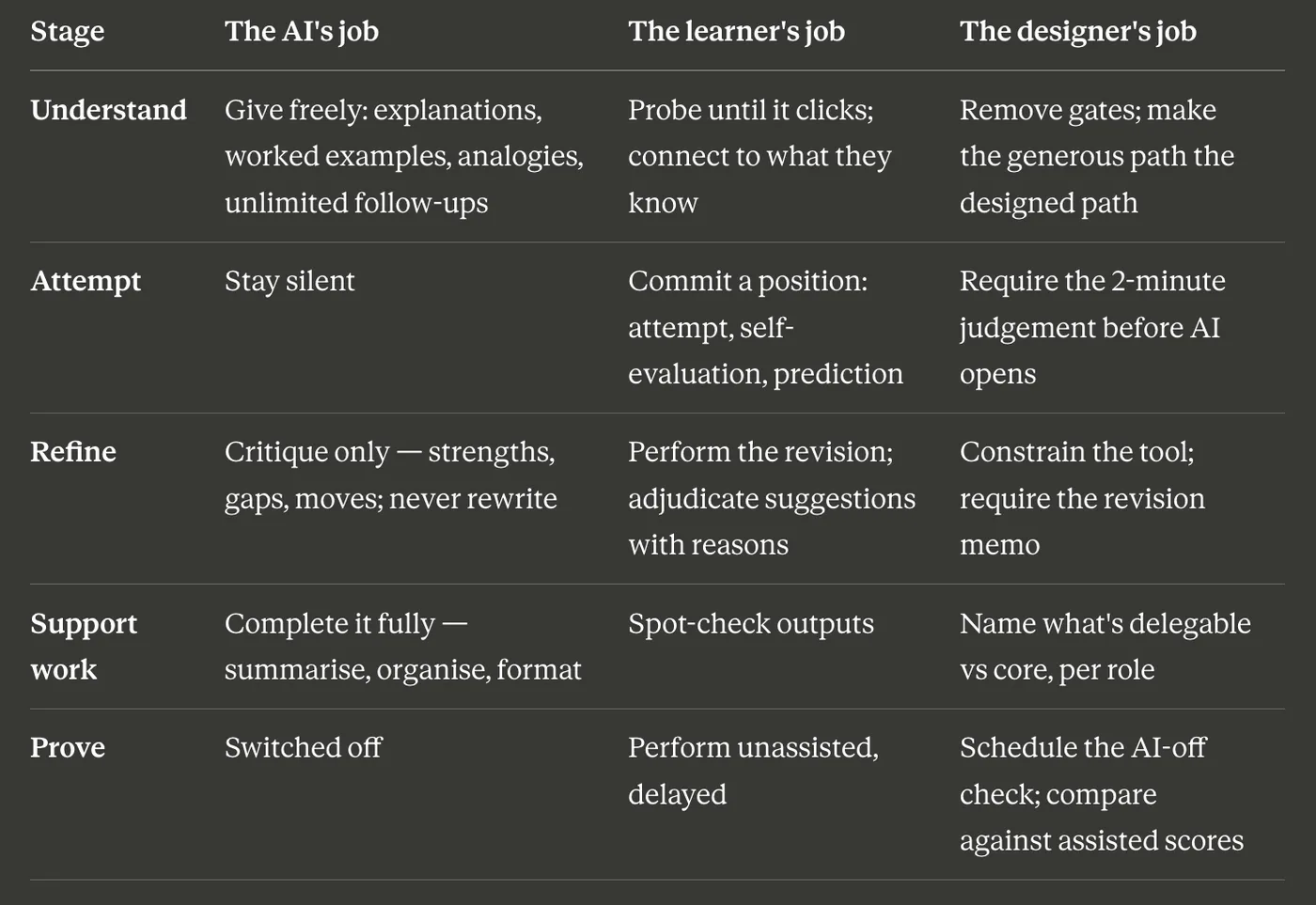
Two excellent features this week. First, Dr. Philippa Hardman’s post on designing around cognitive offloading is the best piece yet I’ve seen on crafting learning experiences to use AI effectively for learning. It should be a reference source for anyone working in your school community to explore AI-aware lesson development.
The second feature is similarly practical: a teacher who uses Claude regularly describes the 15 ways he uses Claude. If you’re interested in exploring how AI might support your workflow, this one is practical and quick.
Also this week, a slate of concerns about AI: researchers develop viable viruses with AI (not ones that can harm humans, though), AI companions are found to worsen loneliness for some people, and more.
At the same time, the question of the value of AI-generated content (or content generated with the assistance of AI) is only growing more complex. What does it mean if we find a story to be meaningful to us — until we found out it was written by AI? Should the source of a work of art determine its value to us? Or is the feeling or thought it summons what is most important? We will inevitably be debating this for years. This week adds a few reflections to that debate.
All these and more, enjoy!
Peter
Dr. Philippa Hardman’s cheat sheet for designing around cognitive offloading. See the feature for more
“For two years, the cognitive offloading debate has been quite binary and vague on specifics: we need to ban AI from the learning experience because it erodes cognition, or let’s embrace AI because it helps us get smarter. A number of studies published in 2026 have helped to move the debate beyond the binary and replace it with a more nuanced (but still incomplete) understanding of conditions under which offloading harms learning, the conditions under which AI improves cognition, and how to design for the difference.”
“Recording myself teach. This one is newer and I’m leaning on it more… I record with Voice Memos whenever I’m doing anything lecture-shaped… Voice Memos will give you a transcript if you tap it. I email it to myself, drop it into Claude with whatever I taught from that day, and say: update the materials based on what I added as I went. That’s the entire prompt.”
“Scientists at Stanford University and the Arc Institute, a research organization in Palo Alto, Calif., taught A.I. to recognize patterns of DNA structure in nature, and then to use that data to write recipes for entirely new viruses. The researchers followed those recipes to create DNA molecules, which they inserted into bacteria. The modified bacteria then produced viruses never seen in nature. The viruses were able to infect other bacteria, demonstrating that they were viable.”
“The thing that’s gone a bit wrong in the water debate, I think, is that today’s new data center construction is almost all closed-loop systems — closed loop in the same way that air conditioning is closed-loop — which means they’re recycling the water within the system, and they use a fraction of the water that golf courses use.”