Learning science and curriculum, AI-assisted writing, and more
An excellent week.
Two provocative features. The first is an exploration of the relationship between curriculum and learning science. Carl Hendrick specifically parses the application of retrieval practice and how sometimes knowledge remembered isn’t the same as the learning objective. It’s a subtle question he’s asking that goes beyond pedagogy 101. Also in the features, see Michael Wagner’s essay from this past December on how he uses AI to write. This is a veteran professor who describes how dramatically using AI to assist his writing has enabled him to do more (and feel more inspired to write) while retaining his ownership of what he produces — with assistance. His approach requires sophisticated thinking in the writing process itself. Couple this with one of the features in the AI section for a second exploration into writing in a time of AI.
Also this week: A philosophical look at what “agency” means, a good post on mentoring new teachers, some dos and don’ts for maintaining the respect (and admiration) of your students, and more.
Also — I’m leading a free webinar in two weeks: Is your campus still struggling with building a healthy culture around AI? It’s likely in part because people are bringing different values to the conversation. Join a virtual session hosted by the Middle States Association (MSA) in which I’ll be talking with MSA president and CEO Christian Talbot about how educational philosophies and differing definitions of AI literacy are clashing with our efforts to make sense of this arrival technology. The free webinar will be Tuesday, August 25, at 11am EST.Learn more and register here.
I look forward in the weeks ahead to sharing more opportunities to connect.
All these and more, enjoy!
Peter
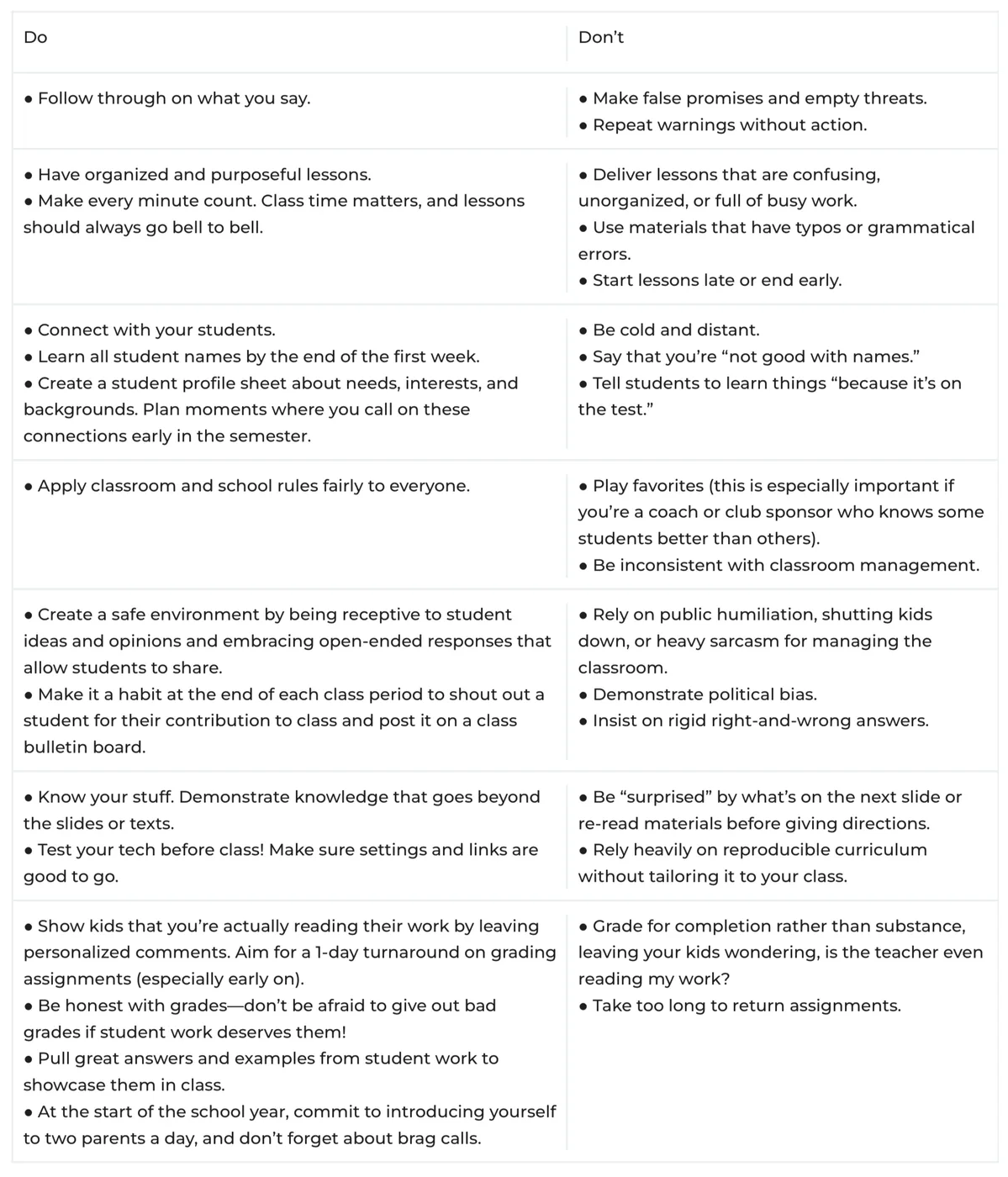
How do you earn your students’ respect and admiration? Here are some Dos and Don’ts. See more in the EdWeek article in the Pedagogy section.
“I spent most of my 30-year academic career struggling with writing. This was not for lack of effort or training. I completed a PhD that required extensive written work and published roughly 80 academic papers across my pre-AI career. But each felt more painful to write than the last. Every article became an exercise in frustration, watching colleagues draft fluent prose while I labored over sentences that never quite sounded right.. Things feel very different now. The Augmented Educator recently passed its first anniversary, marking a year since I began working with AI-assistance to write in ways I could not before. This milestone seems an appropriate moment to reflect on how my relationship with the written word has grown and to explain the practical details of my AI-assisted writing process.”
“Whenever I talk about this topic, I always find myself returning to Tom Perry’s review of cognitive science which showed that the lab evidence is strong but the classroom evidence is incredibly thin with most studies being carried out by researchers, with researcher built materials with conditions which are a world away from the reality of a classroom teacher. Controlled studies in a lab produce replicable results but studies done in a classroom are often mixed. In medicine, this is referred to as a gap between efficacy and effectiveness, whether the drug worked in a trial versus whether it worked when prescribed to a patient.”
“The surveys show that 84 percent of arts and design graduates are employed, compared with 73 percent of college-educated adults over all; 57 percent work full time in the arts; and 83 percent enjoy their work. But their student-loan debt averages about $45,000. When interpreting SNAAP’s Pulse surveys, Vanessa Errecarte, a personal-branding expert and lecturer in marketing at the University of California at Davis, sees what she calls “a starkly bimodal pattern.” “Arts alumni either earn the majority of their income from arts work, or relatively little, a split that highlights both opportunity and precarity,” she says. “It maps,” she argues, “onto who learned to articulate their value and who didn’t. For some, the skill was there. The positioning wasn’t.”
“The Alpha School team set their own performance target for Unbound Academy’s first year. In their application, they claimed they only needed to import their 2 Hour Learning model into public schools, not their selection process. The result was a drastic underperformance of their own targets… Their outcomes indicate that it is far harder to make successful students than it is to select them in advance.”
More on AI-assisted writing, a big week for AI safety, and more
Two excellent features. First, find a fascinating reframing of how we think about AI generated prose. Second, see the Inside Higher Ed piece on the growing number of universities that have prohibited AI detectors.
Also, the Ethics and Risk section has some remarkable stories from the past few weeks, which have sent alarm bells through the industry. AI Agents’ ability to seemingly breeze through security mechanisms and find their way into places they shouldn’t be reminds me of the velociraptors at the gates of Jurassic Park — except instead of packs of scaly predators attacking power fences hoping to find a way out, it’s millions of well-meaning interns repeatedly asking, “I wonder what will happen if I look in here?” as they poke into security system after security system.
Also: while last week researchers announced that they had used AI to successfully design viable viruses, this week researchers announced that they had used AI to design bacteria-eating organisms. More and more these days, I think of E. O. Wilson’s line from 2009: “We have Paleolithic emotions, medieval institutions, and god-like technologies.”
Much to digest this week — enjoy!
Peter
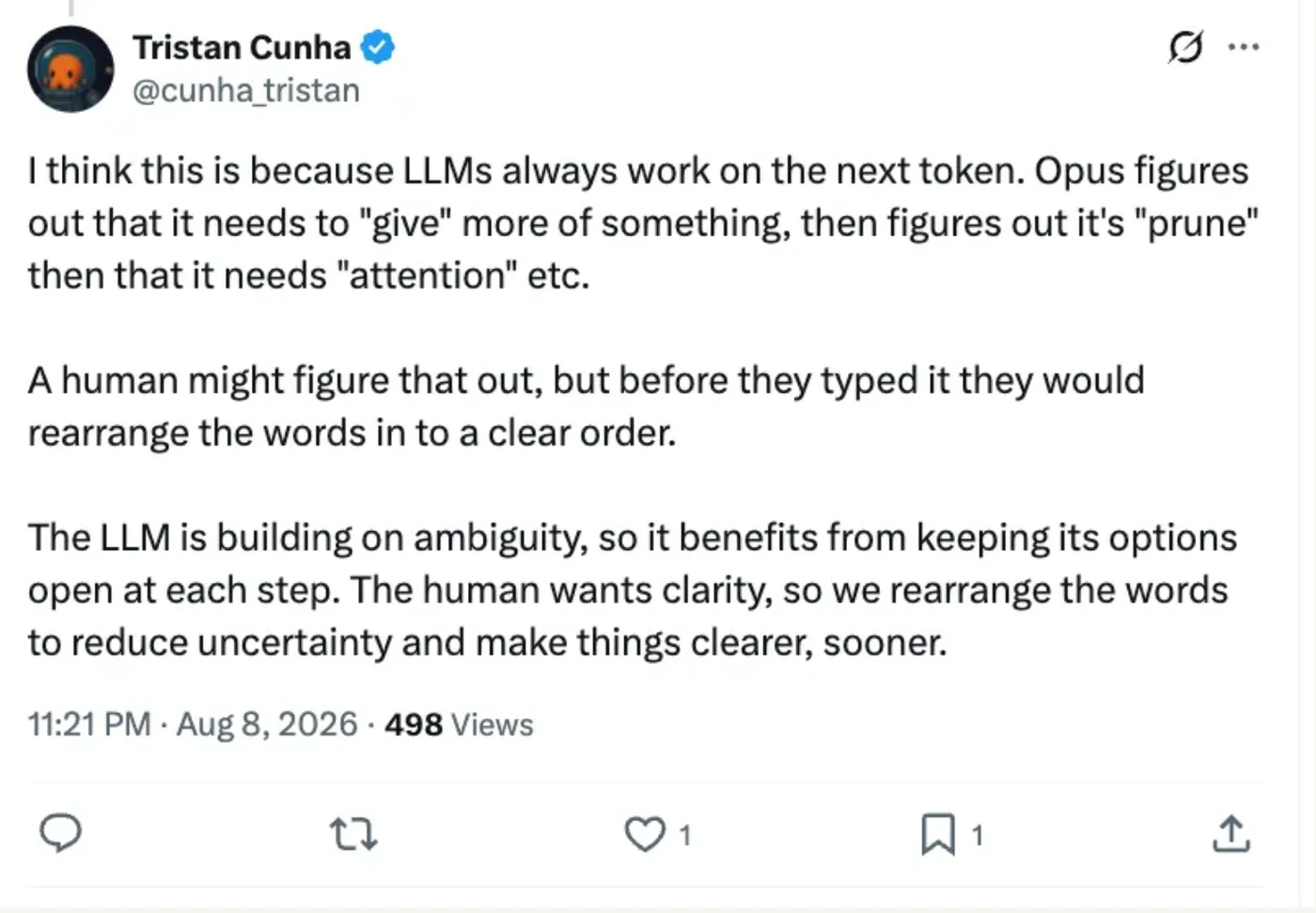
Why does AI writing tend to the abstract? See this and more in the Feature on authorship and writing in a time of AI.
“Last week I went back and ran Pangram through some of my 2019-2020 era blog posts, just out of curiosity. Several of them threw scores of “70-75% AI Generated”. I wasn’t quite sure how to feel about this. Maybe it just means, “You’re allowed to say that a Shakespeare play is Freudian, even if Shakespeare obviously never met Freud; the harmony between the ideas is still valid.” Maybe it means the AI was actually trained on me! I’d be honored.”
““We cannot be giving unsupervised assessments to students expecting them to resist AI. They’re not going to be learning, we’re going to be spending our time trying to catch them cheating and they’re going to graduate and realize they just wasted four years,” she said. Instead, she advises departments to focus on teaching the foundational skills required to use AI responsibly and ethically. “We need to give students a distraction-free, temptation-free environment to tell us what they know and what they can do.””